
From Our Glimmerglass by Kiyoko Yokota
Lakefront Property Owners Advised to Avoid Polystyrene
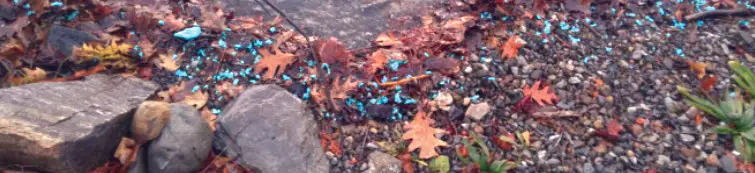
The Otsego Lake Association has been aware of reports from concerned citizens regarding expanded polystyrene foam (EPF, commonly known as Styrofoam) debris in Otsego Lake. They typically look blue, pink, tan, or white and have various shapes and sizes resembling pieces of popcorn. Their possible sources have been identified as deteriorating floating docks, improperly disposed coolers and containers for food, beverages, and bait, and sunken watercraft (which often has foam-filled compartments inside the hull for buoyancy).
Open (bare, non-encapsulated) EPF blocks used for dock flotation have been identified as a source of aquatic plastic pollution. States and municipalities around the U.S. and Canada have banned the use of non-encapsulated EPF blocks in docks and other floating objects in water bodies, and similar laws have been proposed in NY and VT after studies found the prevalence of EPF pollution in Lake Champlain and the Great Lakes.
EPF and other waste plastics in water are known to be mistakenly ingested by various animals and interfere with their normal growth, behavior, and reproduction. There is increasing evidence that microplastics negatively affect microscopic organisms that are important food for larger animals and are critical for nutrient recycling. EPF pieces themselves can release toxic chemicals used in manufacturing into water as well as collect and transport hydrophobic (oily) contaminants such as PCB. Non- encapsulated EPF is more prone to weathering as well as wildlife (e.g., muskrats) compared to other materials, including EPF encapsulated inside a rigid 3/7 4/7 shell.
Existing docks may be retrofitted with a rigid cover to prevent leakage of EPF fragments into water. In Otsego Lake, the attachment of the invasive quagga and zebra mussels to the underside of docks can weigh down floating docks over time. Encapsulated flotation with a hard, smooth surface discourages mussel attachment, and the mussels can be removed by periodic scraping without damaging the flotation. While encapsulated flotations may cost more up front, they tend to last longer and are a better investment in the long run, both financially and environmentally.
OLA encourages lakefront property owners to consider these facts when purchasing or building a new floating dock or maintaining/upgrading an existing one. For additional information, please refer to Chapters 4 and 5 of the 2009 report titled “Flotation Analysis for Boat Docks on U.S. Army Corps of Engineers Projects.”
Those interested in becoming a member of the Otsego Lake Association, or who would like to support the organization’s work, can do so at https://otsegolakeassociation.org/join-us/
Reprinted with permission from the Otsego Lake Association’s “Our Glimmerglass” journal Volume 2025-Issue I.