
Citizen Science #35 by Roberta McLain
The Throat: an Organ that Occasionally Struggles to Multitask
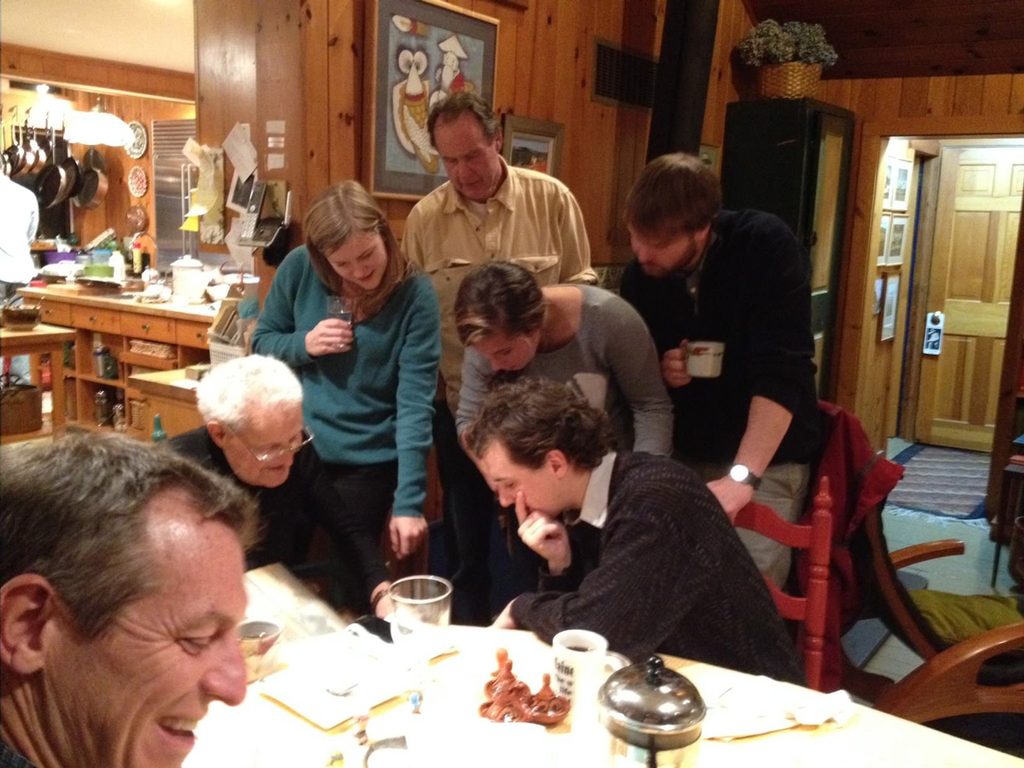
Three generations of us were gathered around the table, enjoying a great meal as well as each other’s company. Typical of our family gatherings, affectionate ribbing abounded. But suddenly, laughter caught my cousin at exactly the wrong moment, and he began to choke. My brother stood up, got behind him, wrapped his arms around him and dislodged the rogue morsel.
From an engineering perspective, the human throat is a terrible design. Food and air have to pass through the same crowded passage. Fortunately, that passage is separated by a flap, but it has to move at exactly the right moment, every single time. When it works, you don’t think about it. But when it doesn’t work, well, you probably don’t think about anything else. So why do we still choke on food even after hundreds of millions of years of evolution? The answer is less about something going wrong, but rather about how evolution works.
Choking is more common than we like to admit. According to the National Safety Council, choking is the fourth leading cause of death by unintentional injury in the United States and results in tens of thousands of emergency room visits each year.
Which begs the answer to a question. We’ve been taught that evolution is supposed to favor survival. Then why did we end up with such a risky system where food and air have to share the same narrow passage while requiring perfect timing? The answer isn’t that evolution failed; it’s that it does the best it can with what it inherits.
The potential trouble begins in the throat, a tube called the pharynx, which has two distinct jobs. For one, in order to stay alive, air has to pass through the throat on its way in and out of the lungs. The other job is also required to keep you alive. Every time you swallow, food passes through the pharynx and is directed down the esophagus, a tube that leads to the stomach. A small flap of tissue called the epiglottis briefly drops to block the airway, called the trachea, to allow food to pass safely into the esophagus. But if you laugh mid-bite or inhale too soon, the timing can be disrupted.
To understand why our throats work this way, we have to travel back to long before we sat at dinner tables and even before we lived on land. Our earliest vertebrate ancestors, animals with backbones such as fish, lived in water. Breathing and eating didn’t compete for space or time. As fish swim, water moves across their gills on the sides of their heads, providing oxygen while they can eat simultaneously. Choking isn’t an issue.
Then some of our ancestors moved onto land and began breathing air. Evolution made adjustments using the parts that were already in place. Comparative anatomy and the fossil record show that throat structures that already existed to handle food were gradually modified so they could handle air as well. The result wasn’t the safest possible arrangement, but it worked well enough to keep those early animals alive. That setup has been with us ever since.
Natural selection favors traits that help a species survive and reproduce. Those traits don’t have to be perfect. For most of human history, the shared pathway for food and water worked well enough that the majority of people survived their meals and passed on their genes.
From an evolutionary perspective, that’s considered success even if it does occasionally result in a coughing fit. With each swallow, the brain, nerves, and dozens of muscles coordinate in the precise manner that you rely on hundreds of times a day without you having to give it a second thought.
Modern conditions may play a role in disrupting that system more than they did for our early ancestors. Talking and laughing while you eat requires your throat to handle two competing tasks. Alcohol impacts reflexes and can dull the very reflex that would normally snap the airway shut in time to swallow. There are even some medications that can increase dysphagia—the medical term for difficulty swallowing. We’re living longer, and aging can slow the nerve signals and weaken the muscles we use to swallow. And on top of that, we have to consider all the distractions today, such as phones, television, and eating on the run. A lot is being asked of a system that evolved when mealtime was quieter.
Fortunately, there are things you can do to lower the risk of choking. For one, slow down while you eat. This limits the competition between breathing and swallowing. Learn choking first aid, such as the Heimlich maneuver, which can dislodge the choking material. Don’t hide. Sadly, many people instinctively become embarrassed when they are choking and go somewhere to be alone. People can’t help you if you hide. And if you see someone you think may be choking, check on them. Choking is a medical emergency. Responding quickly and calmly matters more than sparing someone embarrassment.
So the next time laughter erupts around your dinner table, you probably will not be thinking about fish or evolution. But fortunately, an ancient system will probably be timing the breaths and the swallows correctly. It usually succeeds. And, from an evolutionary perspective, that is enough.
Roberta McLain is a science writer and educator specializing in neuroscience, evolution, and the life sciences.