Invasive Species: Pesky Plants
Coltsfoot Not Easy to Rein In
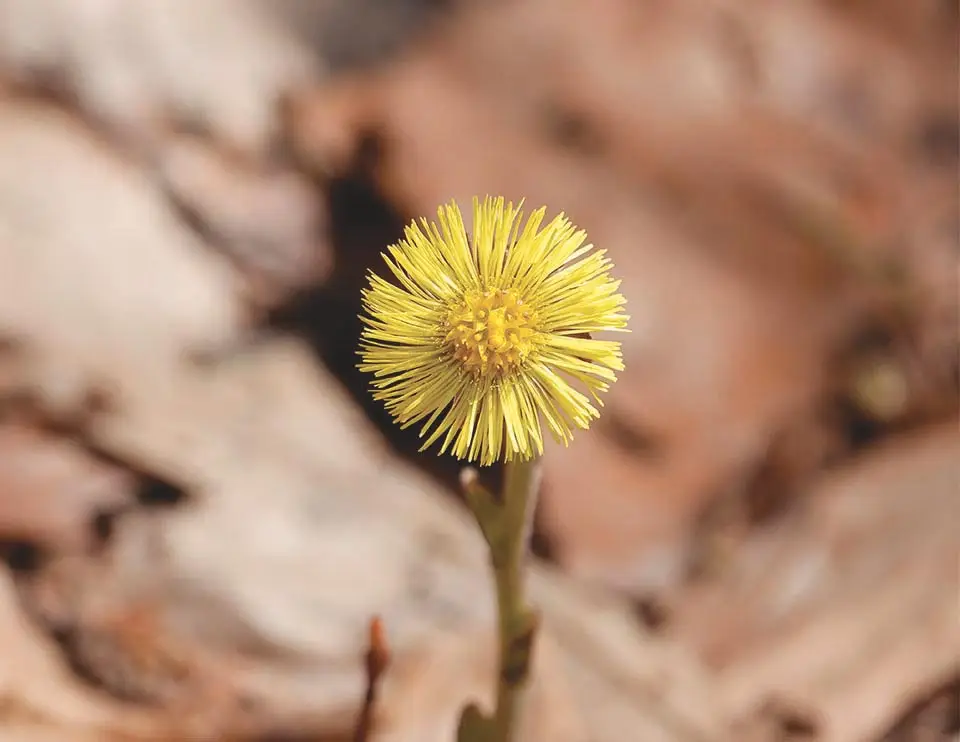
What could be more welcoming than the first flowers of spring? The little points of yellow on the sides of the road can bring a smile to the face of the winter-weary in our area. But hold that thought! Those swaths of golden cheer give way to saucer-sized, broad leaves that choke out nearly every other native plant.
Coltsfoot (Tussilago farfara) is a small perennial plant that is invasive in much of the northeastern United States. It crops up in areas where the soil has been disturbed, such as roadsides and building sites. Coltsfoot’s value to wildlife in our area is very small. It spreads by both sending out underground shoots (rhizomes) and by seeds carried on the wind after the bloom.
Coltsfoot is native to Europe and parts of Asia. It was likely transported by early immigrants for its medicinal properties (part of its Latin name comes from the word for tussis, cough!). And while some foragers will eat coltsfoot flower buds and young leaves, these contain a family of chemicals, pyrrolizidine alkaloids, which can be toxic. Coltsfoot is listed in the Poisonous Plant Database of the Food and Drug Administration. Traditionally, it has been used as a remedy for chronic cough, but has been noted to be toxic at certain high levels. None of the traditional uses of coltsfoot are supported by scientific studies and it is currently banned in Germany.
Coltsfoot is tenacious, and doesn’t give ground easily. It grows in a variety of settings and soil types. Not only does it self-sow with little airborne seeds, but it sends out underground runners, out of sight, to increase its footprint even over the course of one season. It will come up even through asphalt when established next to walks or driveways. It occurs in the north from Minnesota and Canada, and to the south in North Carolina and Tennessee. Sadly, coltsfoot will sometimes infiltrate an area where Japanese knotweed has been painstakingly eradicated (another invasive species, previously addressed in this column).
Getting rid of coltsfoot is a challenge. The time to get some degree of control may be already past for this year. The explanation is that this invasive plant blooms and goes to seed before the invading leaves take over (and you thought those were just pretty spring flowers). In moist soils, coltsfoot pulls up easily and, with an hour of bending and pulling (and the stiff back to remind you), large patches can be significantly reduced. Alas, as is nearly always the case, a few underground runners will be missed and they will shortly leaf out. And then there are those seeds that floated off to populate another spot of disturbed ground. Invasive, indeed! We need to stomp out coltsfoot and rein in this invasive species.
Chris Kjolhede, MD, MPH, is an emeritus pediatrician at Bassett Healthcare Network.