Look But Don’t Eat
Faux Food Now on Permanent Display at Hyde Hall
By TERESA WINCHESTER
SPRINGFIELD
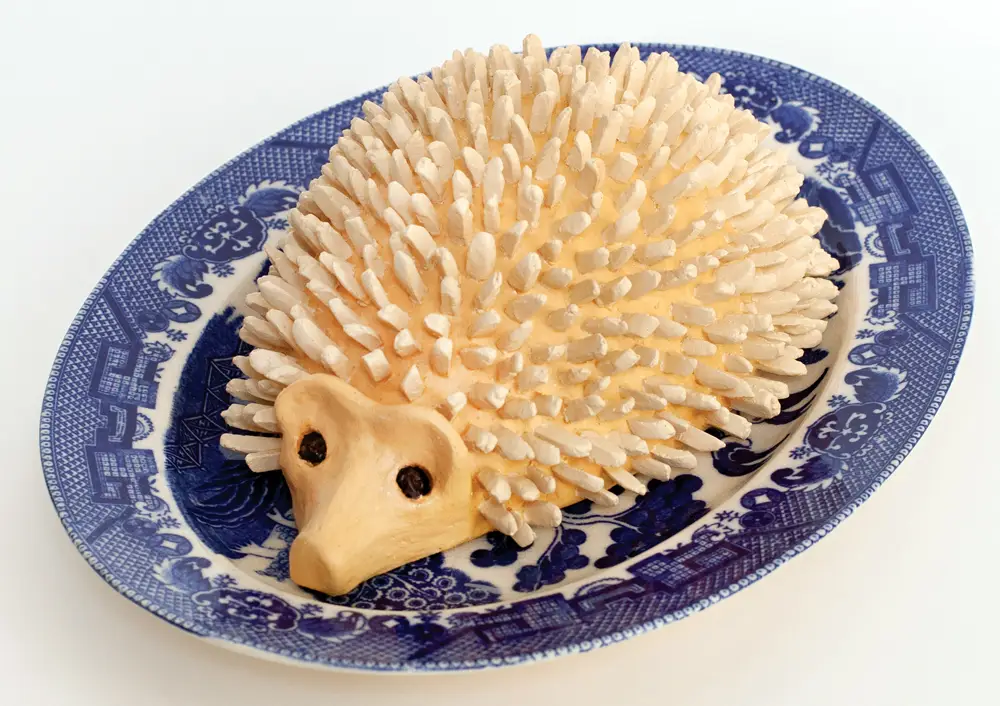
Might your palate be tempted by a hedgehog? For upper class diners of the early-19th century, hedgehogs were common table fare, not as a meat dish, but as a dessert. Lifelike forms of the prickly erinaceid were made from almond paste, with almond slices stuck into the sides to resemble its spines.
The edible hedgehog, along with menu items for breakfast, a formal tea and a formal dinner have been created by artist Carrie Mae Smith in collaboration with Hyde Hall personnel. The public will be able to see all of these settings when Hyde Hall opens for its 2025 season on Saturday, May 24.
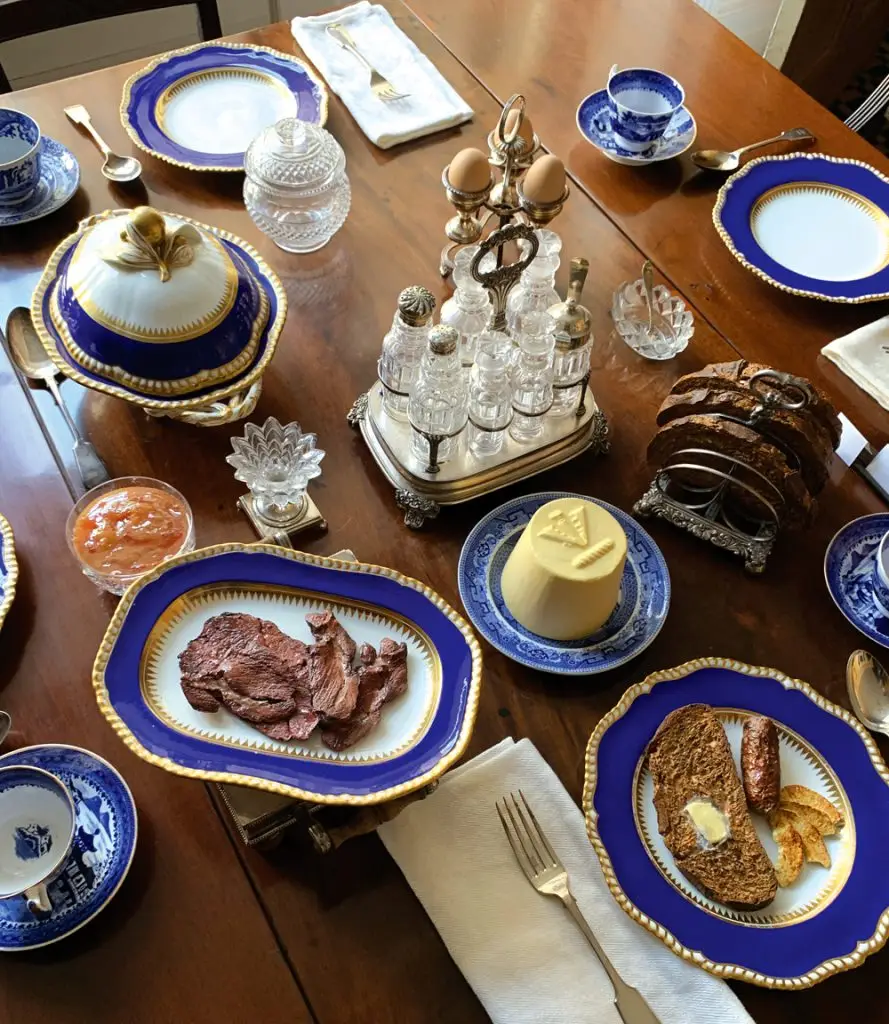
The summer breakfast, displayed in the Hyde Hall family dining room, features fried sausages and apples, boiled eggs, fried ham, toast and butter, quince jelly, and fresh strawberries. The drawing room replicates a formal tea menu, serving up rich seed cake, fruit tarts, thinly sliced ham, orange chip and cherry sweetmeats, and the distinctive hedgehog. The bill of fare for dinner, served in the formal dining room, replicates a Christmas dinner, offering turkey, oysters and puddings. These items were on display for the Victorian Candlelight Christmas tours. A fourth menu, which would include asparagus, carrots, celery and apple, and apricot or pear pudding, has also been devised and will be mounted when the necessary funding is secured.
The menus were all devised for the family of George Clarke, who oversaw the building of the neo-classical mansion between 1817 and 1834. Having passed through five generations, the estate faced demolition until the Friends of Hyde Hall, formed in 1964, created a partnership with the state to preserve and interpret the mansion, outbuildings, and grounds. Hyde Hall is now listed on the National Register of Historic Places and as a National Historic Landmark, serving as a museum and offering tours and events for public enjoyment and historical exploration.
The initial meeting to determine the make-up of the menus included food historian Pamela Cooley, Hyde Hall Board of Trustees Chair Gib Vincent, Hyde Hall Executive Director and Chief Executive Officer Jonathan Maney and Hyde Hall Media Manager Dominique Doktor.
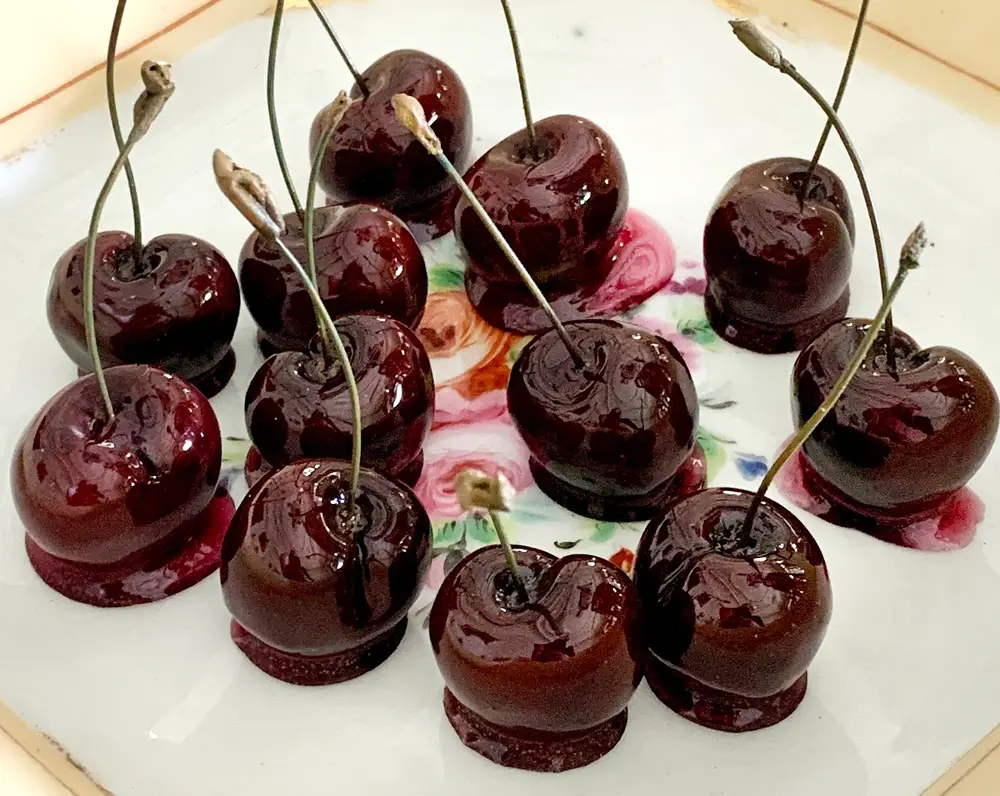
Most of Smith’s faux food creations—butter, eggs, cake and others—were made from plaster of Paris. Other items, such as the quince jelly and thinly sliced ham, called for more translucency, which required experimentation on Smith’s part. She discovered a urethane resin to cast the jelly in and found that paraffin wax tinted with crayons made life-like ham facsimiles. For most items, Smith made molds and then cast positives out of plaster or other materials. A few items, such as the butter with the Clarke family emblem and the orange sweetmeats, were sculpted. All the food items were finished with acrylic paints and glazes.
Executive Director Maney said he was grateful to have Smith’s “extremely realistic” faux foods at Hyde Hall.
“Showing our visitors the varieties of food and confections enjoyed by the Clarkes in the 1830s adds a whole new layer of authenticity to the Hyde Hall experience. It’s a treat to compare what we eat today to the fanciful delicacies of a more elegant era,” Maney said.
Hyde Hall is a subject familiar to Smith.
“It has inspired many of my paintings, so working directly with its history—and its brilliant staff—has been especially rewarding,” Smith said.
Producing historically accurate faux food combines Smith’s artistic abilities with her other interests: a love of food and food history, sculpture, and painting. All of these interests and skills were employed in her hand-craft, which required careful research and consultation with experts to locate and replicate food items from 1835 with accuracy.
“Each piece of food is created individually and required attention to specific dimensional details and hand-painting. The end results connect with Hyde Hall’s historical setting. They are site-specific installations, which, I hope, will inspire curiosity and provide a point of engagement for all ages,” Smith said.
Smith studied sculpture and painting at the Pennsylvania Academy of the Fine Arts and earned an MFA from the University of Delaware. Her interest in collaboration with historic house museums was activated at Winterthur Museum and Gardens, where she was an artist in residence in 2013. Drawing on her background as a personal chef and interest in how food connects to place and memory, Smith creates oil paintings and sculptures about food and food culture inspired by her garden, personal collection of antique china, and from museum collections. She lives and works in Gilbertsville and teaches 3D design part time at SUNY Oneonta.
The faux food project is funded in part by the Earlville Opera House’s Arts in the Community Grants Program, made possible by the New York State Legislature with support of the Office of the Governor, and administered by the New York State Council on the Arts.
More information about Hyde Hall and its tours, events and rentals is available at www.hydehall.org.