
Joseph Hernandez Elaborates on His Run for GOP Comptroller
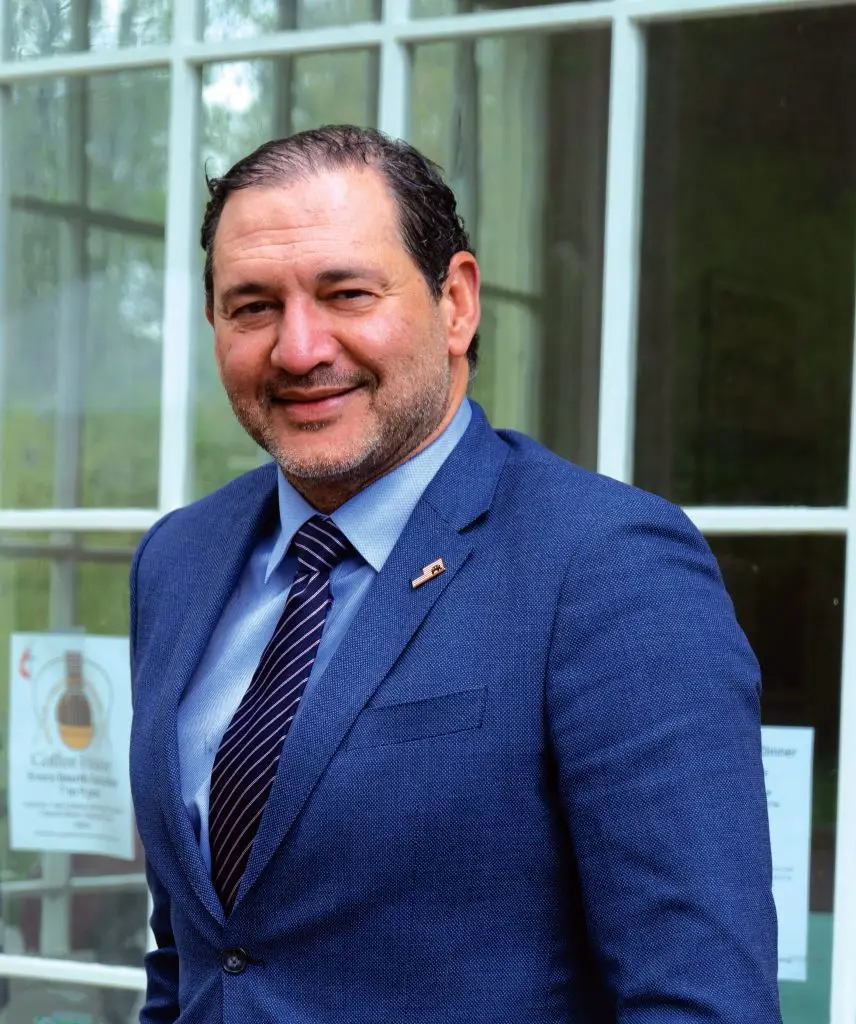
By ERIC SANTOMAURO-STENZEL
COOPERSTOWN
Joseph Hernandez, the presumptive GOP nominee for the New York State Comptroller race, says it is his business background that motivated him to seek the office.
“I know the dealings of Wall Street and how to do that well, which is part of the role,” Hernandez said in an interview last week at AllOtsego’s offices.
The state comptroller since 2007, Democrat Tom DiNapoli, faces a primary from Raj Goyle and Drew Warshaw. The winner is expected to face Hernandez in the November election.
Raised in Florida after he and his family left Cuba as refugees, Hernandez earned a bachelor’s degree in neuroscience, a master’s degree in molecular genetics and microbiology, and an MBA in finance and entrepreneurship from the University of Florida, according to his campaign site. He also earned a chronic disease epidemiology and biostatistics master’s at Yale University and is currently pursuing a global healthcare leadership master’s at the University of Oxford. Professionally, he said, he has invested and founded more than a dozen biotechnology, healthcare, and technology companies.
Hernandez sees some of the main issues facing New York’s finances as fraud, waste and abuse. Using the powers of the office, he said, he would audit Medicaid funds and the Metropolitan Transit Authority.
Hernandez alleged that as much as 10 to 15 percent of the state’s Medicaid budget is “fraudulent,” and that “that’s probably $20 billion of theft that we’re doing nothing about.”
“We have let the MTA run amok, and that’s going to stop when I become comptroller,” he said.
Hernandez argued that the Comptroller’s Office investments should not be made with any political goal, either with new investments or divesting from existing ones.
“I think that’s why I contrast myself to the folks running on the Democratic side; investing is an apolitical exercise,” he said, referencing calls from some comptroller candidates for the state to divest from Israel bonds, digital surveillance company Palantir and the fossil fuel industry. He cited the comptroller’s “fiduciary duty” to “get the highest internal rate of return for the pensioners.”
Hernandez said he would not invest in “things that kill humans,” adding, “I can’t give you any examples of what I would and wouldn’t do, because I think you need to analyze these things holistically.”
Supporting upstate investment is a priority, Hernandez said. Regarding NVIDIA’s partnership with Corning Inc. to expand manufacturing of components required for AI data centers, Hernandez said, “The headquarters of Corning is in New York. Why don’t we invest in New York? Why don’t we facilitate an investment?” He also pointed to the Micron project near Syracuse, saying he would use the state’s pension fund to invest “as an equity holder” in tech companies, including startups, building materials for the project.
Though highly critical of Comptroller DiNapoli’s leadership, Hernandez highlighted one area of agreement: opposing a proposed provision in the state budget that would increase the threshold for state contracts to receive comptroller review from its current number of $50,000.00 to $300,000.00. Hernandez has threatened to file a lawsuit if the proposal makes it into the adopted state budget.
“That number matters because it’s six times the current threshold, but more importantly, it lets about $4 billion of taxpayer dollars go without audit, without review,” Hernandez said.