
U.S. Citizens Can Protect Democracy by Fighting ‘The Noise War,’ Author Says
By DEBRA MOFFITT
COOPERSTOWN
When journalist J.J. Green, author of “The Noise War” visited Cooperstown last week, he gently tossed baseballs into the crowd, a nod to his childhood dreams of making it to the Hall of Fame.
Then he tossed something much more challenging at the audience gathered in a famously All-American village: Can average citizens learn to recognize and defuse disinformation in time to save our U.S. democracy? Can we find a shared source of truth before it’s too late?
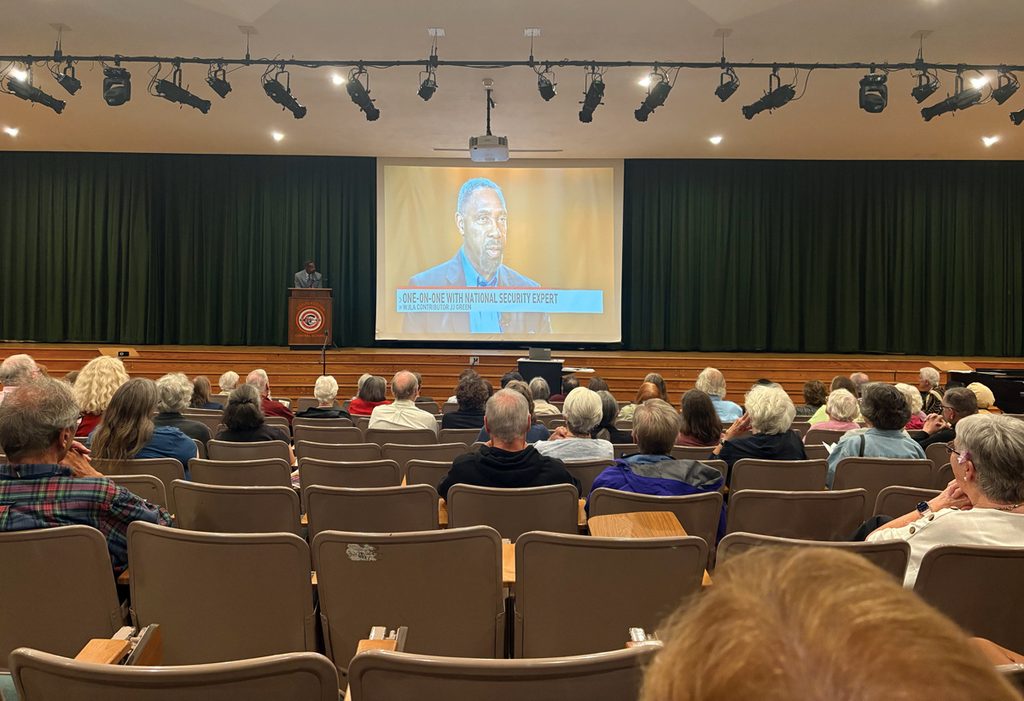
Green was among Pentagon journalists who last year surrendered their press credentials rather than sign a Defense Department pledge to limit their reporting only to information released by the Trump government. The reporter described himself as “humanity-motivated, not politically motivated” at the talk presented by the League of Women Voters of the Cooperstown Area at Cooperstown High School on Thursday, September 17.
Disinformation is nothing new, said Green, a national security reporter for 25 years. His book points to the Nazis, Stalin and, more recently, Putin. In places like Belarus, disinformation—a deliberate attempt to communicate false information—morphed into the dominant narrative, according to a Belarusian journalist Green quotes in the book, a slim volume intended for citizens, journalists, students and leaders.
In the United States, we’re celebrating 250 years of democracy, but some cracks are showing, he said. Our political divisions run deep, the number of journalists has shrunk and bad actors know how to manipulate people of all political stripes in social media platforms.
“The nature of warfare has changed. The modern weaponry employed against us doesn’t make a sound. It lands directly in the palms of our hands,” he said. It’s our phones.
From the shadows, dark forces hijack our brains with outrageous claims in social media.
We react with urgency and share, share, share.
“It works because we’re human,” said Green, a reporter for WTOP radio in Washington, D.C.
“A field manual for the information battlefield,” Green’s book gives readers a methodical framework for identifying disinformation and stopping the spread. Here’s what he recommends:
- Verify claims by checking research hubs like Snopes, PolitiFact and FactCheck.org.
- Find the original source of the information and ask if the source is credible.
- Avoid endless scrolling.
- Be suspicious of shocking posts that provoke extreme emotion and ask: Who benefits if I believe this? Who loses?
We shake our heads at what some people believe to be true, but we’re all potential marks for lies and disinformation. The Secret Service last year uncovered clandestine telecom networks capable of spamming the whole country in a matter of minutes, Green said. In the book, he cites “Pizza-Gate,” the conspiracy theory that top Democratic officials were running a child-trafficking ring out of a D.C. pizza restaurant.
“By the time credible journalists began to debunk the story, the damage was done,” Green wrote, noting that a misled North Carolina man traveled to the restaurant with an automatic rifle and fired shots before he was arrested.
Consuming disinformation and spreading it plays right into the hands of those who want to keep Americans divided and thirsty for clickbait, Green said. They target our need to feel superior and correct. Believing only what you hear on selected highly politicized channels is bad. But without a shared source of truth, something even worse could come next, he said.
“After a while, disinformation makes you doubt everything,” Green said. “Truth is a muscle that must be exercised.”
His case in point: When a would-be assassin barged through the security gates at this year’s White House Correspondents’ Dinner, Green said too many people reached out to him asking a bizarre question: Did that really happen? Why would so many people—doctors, lawyers and university professors among them—imagine something at that scale could have been stagecraft?
At this discouraging moment in history, it can be tempting to disengage. But Green recommended the opposite to the Cooperstown audience of about 100. Broaden your sources of news and keep reaching out, with respect, to those who don’t agree with you.
Stay in the game, stay vigilant and engage with your community, he said. Support voter registration, nonpartisan political forums and groups like the League of Women Voters.
“Democracy,” Green said, “is not a spectator sport.”