
Life in the time of COVID
AFB Vaccine: It’s the Bee’s Knees
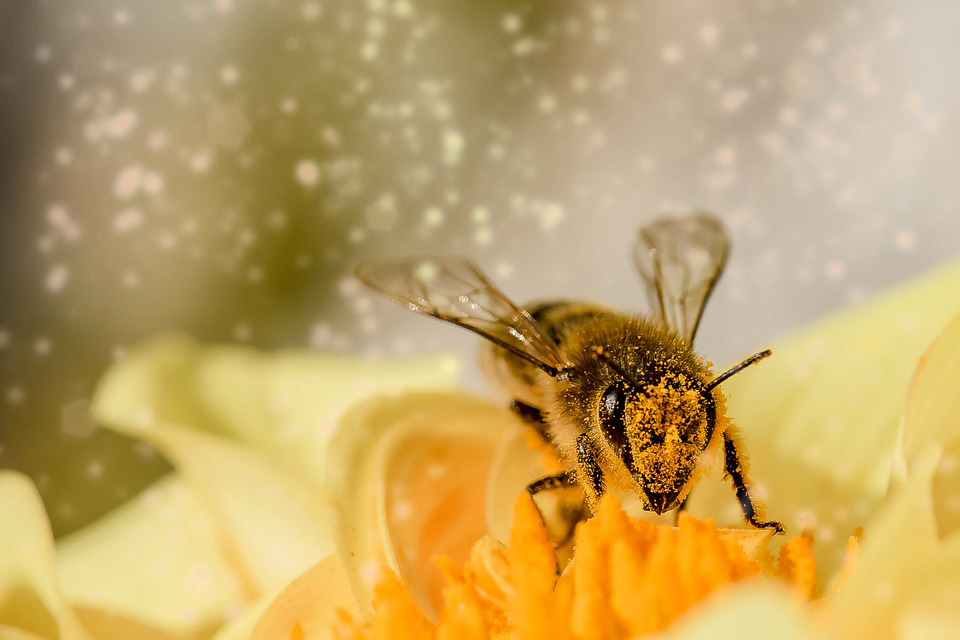
The announcement of probably the most important medical breakthrough of this year was made on January 7. It had nothing to do with COVID. In fact, it had nothing to do with human diseases. Dalan Animal Health, a company in Georgia, announced that they had successfully produced a vaccine to protect bees from a disease called American Foulbrood which had been conditionally approved by the U.S. Food and Drug Administration. This is the first vaccine approved for use in insects. In my opinion, this trumps the importance of any other medical announcement so far this year, including information on COVID and other human diseases, because preventing the die off and extinction of many bee species is critical for enabling the growth of a majority of the world’s food supply.
American Foulbrood is a highly contagious and destructive bacterial disease that affects honeybees. It is estimated that bees are responsible for 75 percent of all crop pollination. It is caused by a spore-forming bacterium, Paenibacillus larvae, which can remain dormant in honey and beehive equipment for years before infecting a new colony.
The disease is characterized by the appearance of sunken, perforated and discolored brood cells, which are filled with a brown, glue-like substance. Infected larvae die before they can emerge as adult bees, and the disease spreads rapidly throughout the hive, eventually leading to the death of the entire colony.
The significance of AFB in crop pollination is that honeybees are the primary pollinators of many crops, including almonds, apples, blueberries, cherries, cranberries, cucumbers, melons and pumpkins, among others. AFB can cause significant losses in bee populations, making it difficult for farmers to find enough bees to pollinate their crops, which will reduce crop yields and quality.
Furthermore, AFB is a highly regulated disease, and infected hives must be destroyed to prevent the spread of the disease to other colonies. The loss of hives is devastating for beekeepers who rely on their bees for income, as well as for the agricultural industry, which depends on healthy bee populations for successful crop pollination.
Before you imagine thousands of bees lining up for their injections, the vaccine is delivered in the form of food for the queen bee. The queen is the only bee in the hive that reproduces. The vaccine which contains dead versions of the Paenibacillus larvae is injected into the royal jelly, the food given to the queen. The vaccine then gets deposited in the queen’s ovaries so that every developing bee automatically has immunity from AFB when hatched. Theoretically, a larvae destined to be a future queen would carry the vaccine and be immune to the disease.
There are other diseases affecting bee populations which in turn are causing decreases in crop production. Varroa destructor, the Varroa mite, is an external parasitic mite that attacks and feeds on honey bees. The disease caused by the mites is called varroosis.
The Varroa mite can reproduce only in a honey bee colony. It attaches to the body of the bee and weakens the bee by sucking fat bodies. The species is a vector for at least five debilitating bee viruses, including RNA viruses such as the deformed wing virus. A significant mite infestation leads to the death of a honey bee colony, usually in the late autumn through early spring. Varroa is considered to be one of multiple stress factors contributing to high levels of bee losses around the world.
Sometimes the story with the potentially biggest effect on mankind is not the one in front of your face. Even though COVID unchecked could kill tens of millions, loss of the ability of plants to be pollinated could cause unimaginable loss of crops, leading to world-wide famine and death.
Dr. Richard Sternberg is a retired Bassett Healthcare orthopedic surgeon.