
Take Me Out to the ‘Old’ Ball Game
Beisbol in Mexico City and the Game’s Pre-Historic Lineage
By CHARLIE VASCELLARO
MEXICO CITY
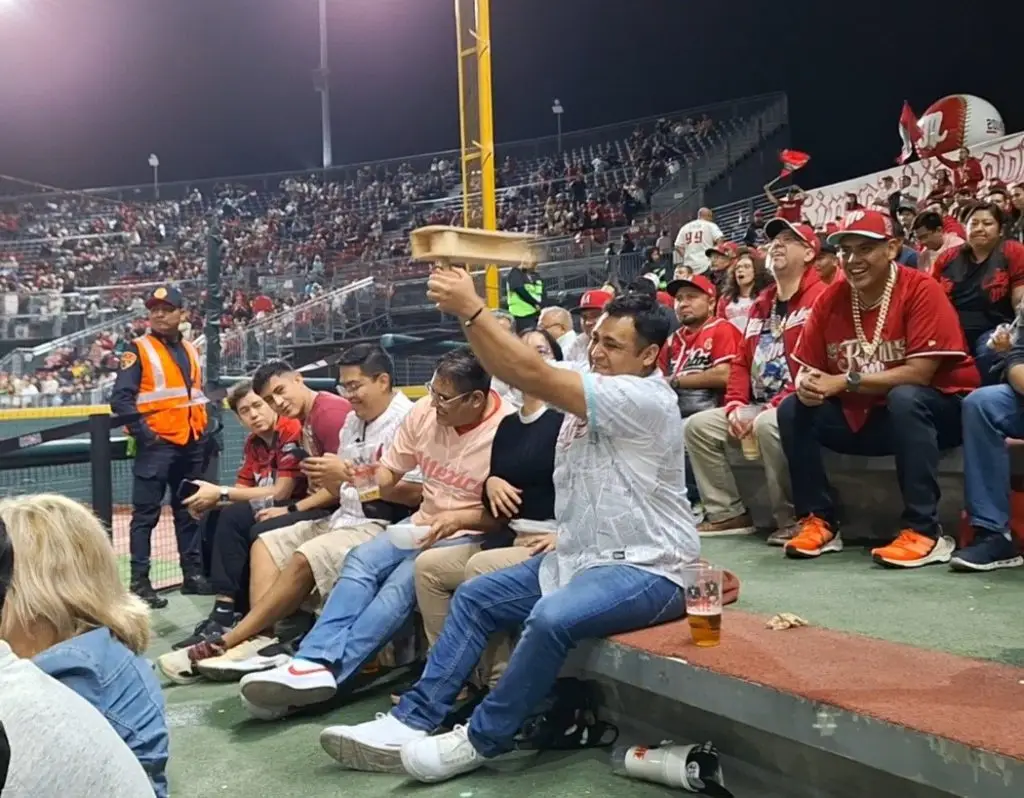
The biggest difference between Mexican and American baseball is the noise. The sheer volume of noise being generated by the packed house of approximately 20,000 fans was the first thing I noticed as I entered Estadio Alfredo Harp Helú, (home of Mexico City’s Diablos Rojos).
The loud rattling sound of the wooden matracas (ratchet noisemakers) is one of the defining characteristics among a multitude of sensory elements involved with Mexican major league baseball games. A celebratory atmosphere permeated the proceedings in ways that fans of Major League Baseball in the United States might associate with post-season playoffs and World Series games.
I didn’t have a matraca during the first of the two games between the Diablos Rojos and Pericos de Puebla that I attended on a Tuesday night. But after watching, and, notably hearing the fans around me using them throughout the game, I knew I had to get one. I purchased one from a vendor outside of the ballpark on my way into the next day’s game.
An example of just how different the Mexican baseball and U.S. fan experiences can be was immediately evident when I brought my matraca to a Baltimore Orioles game back home at Oriole Park. Upon the completion of the pre-game “Star-Spangled Banner,” I gave the noisemaker a good, long whirl in support of the home team. No sooner had I sat down for the first pitch of the game when an usher approached and confiscated my new favorite toy (I got it back after the game). Before the usher went off to lock up my contraband, I showed her a video clip from the game in Mexico City on my phone and said, “It’s sure more fun to watch a game in Mexico.”
They’ve been playing baseball in Mexico just about as long as the game has been played in the United States. Baseball may have been introduced to Mexico as early as 1846 or 1847 during the Mexican-American War. Legend has it that after American military men won a decisive battle, and captured the wooden leg of future Mexican President Antonio López de Santa Anna, they used it as a bat in the first baseball game played in Mexico, at a park in Xalapa, Veracruz. Whether the tale is true or not, the game continued to spread across the country by way of U.S. military occupations and was wildly popular by the 1880s. The current Liga Mexicana de Beisbol, consisting of 16 teams in two divisions, was founded in 1925 and is celebrating its 100th anniversary this season. Mexican major league baseball is classified as a non-affiliated Triple-A level minor league.
The historic origins of baseball have always been a subject of popular debate, especially in Cooperstown, the symbolic birthplace of the national pastime. While the Abner Doubleday creation myth has been debunked, the town’s famous ball field still bears its name. It is a source of pleasure and pride for locals to imagine that the game was created within Cooperstown’s pastoral surroundings.
Fourteen years ago, Major League Baseball’s Arizona Diamondbacks and Colorado Rockies moved their spring training operations to the newly constructed Salt River Fields at Talking Stick ballpark facility. Located adjacent to Scottsdale, Arizona, on the Salt River Pima-Maricopa Indian Community, it is the first Major League Baseball facility built on Native American land.
“Bringing Baseball Back Home” was a tagline attached to the project.
“Ball games have always been played in this region,” said community spokesman Levi Long at the time. “The ancients used ballparks for socializing and commerce.”
While working on a series of stories for various publications about the Diamondbacks and Rockies’ new spring training grounds, I visited historic ball courts created nearly a millennium ago by Arizona’s indigenous people in areas nearby the current site of Salt River Fields at Talking Stick.
These historic native ball courts more closely resemble the fields and courts of rectangular games like basketball, soccer, and hockey. But they can also be seen as the forerunners in the lineage of competitive spectator sports dating back nearly 3,000 years.

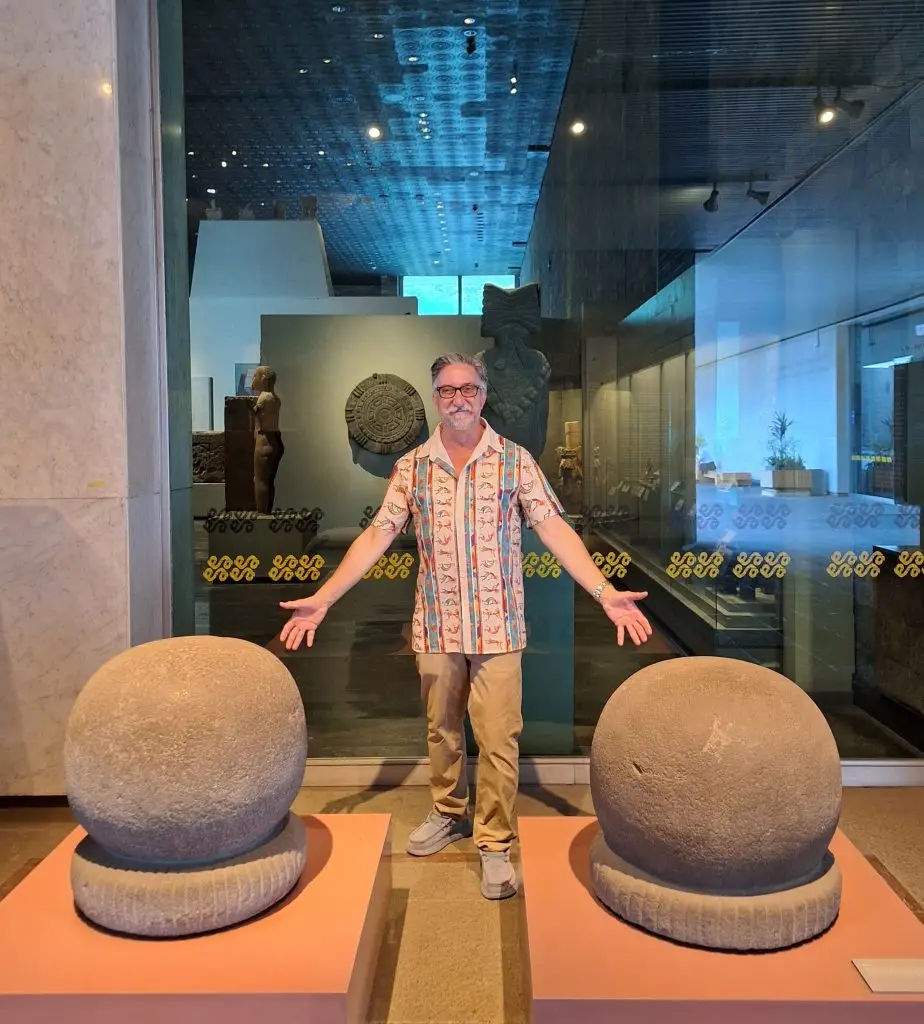
On a recent trip to Mexico City, I was reacquainted with the “Old Ball Game” at the Museum of Anthropology, providing historical context for the games I attended at Estadio Alfredo Harp Helú.
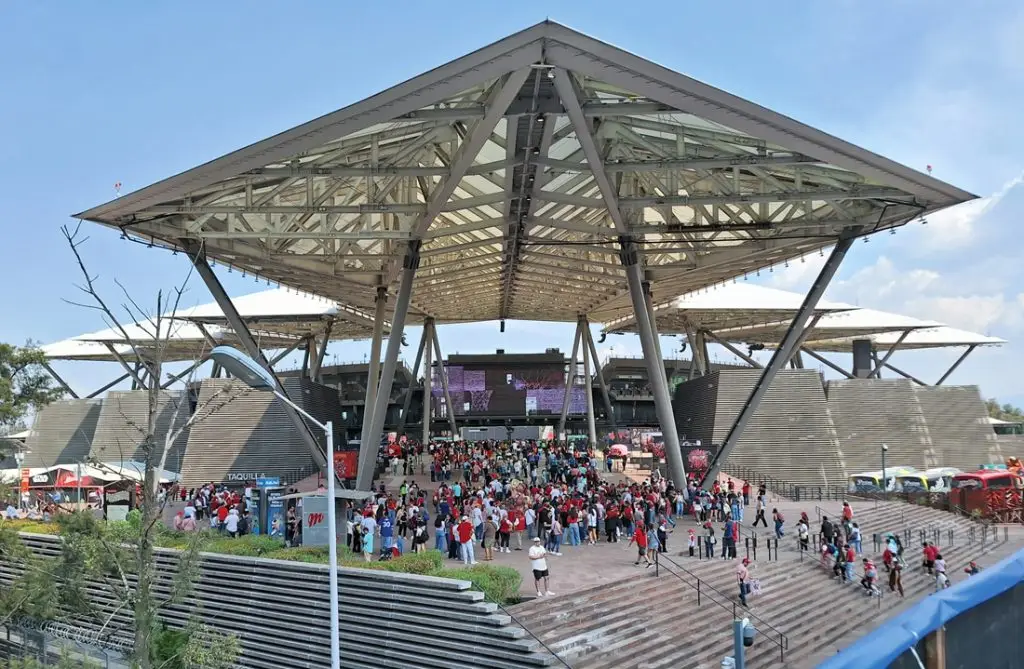
Opened in 2019, Estadio Alfredo Harp Helú is named for the prominent Mexican businessman and philanthropist.
Blending the region’s historic architecture with state-of-the art design, the ballpark’s dramatic elevated entrance resembles ancestral Mesoamerican temples and Aztec pyramids. The seemingly detached floating roof in the shape of a trident spear is a nod to the team’s devilish identity, pointing toward the infield over the seating bowl.
The most successful team in the league since its inception in 1940, the Diablos Rojos are often referred to as the Yankees of the Mexican League, making its debut against another first-year franchise at the time, the Azules de Veracruz, in the port city of Veracruz.
The 1940 Azules finished first in the Mexican League, one game in front of the Diablos Rojos. The Azules were owned by millionaire shipping magnet Jorge Pasquel and boasted five future Hall of Famers that previously played in the Negro Leagues on its roster, including slugging catcher Josh Gibson, infielders Ray Dandridge and Willie Wells, and pitchers Leon Day and Martin Dihigo. The 1940 Diablos Rojos counted 14 former Negro Leaguers on its squad, including pitcher Theolic “Fireball” Smith, who is depicted as a character in “The Veracruz Blues,” a historical fiction novel that I brought with me on the trip.
The book tells the story of the 1946 Mexican League season, when Azules owner Pasquel attempted to create a rival major league in Mexico by signing disgruntled major leaguers, many of whom served in the U.S. Military during World War II to find their salaries had been cut upon returning home.
The Diablos Rojos reign of terror began with the team’s first Serie del Rey (The King’s Series) Mexican League championship in 1956, and includes a record 17 championships, the most recent in 2024.

As marvelous and architecturally inspiring as it is, Estadio Alfredo Harp Helú feels like the headquarters of an Evil Empire. Fans of the Diablos Rojos identify as members of “La Antesala del Infierno” a pseudonym for the ballpark known as the Antechamber of Hell. Members of the team’s fan club sit in a section of the right-field bleachers under a banner reading “Simpathia por los Rojos,” engaging in any number of call and response chants and thematic songs throughout every inning of the game. They sing “Take Me Out to the Ballgame” in Spanish during the seventh-inning stretch.
Diablos fans create a good-natured but semi-hostile environment for the visiting team. At the games I attended, the poor Pericos de Puebla lost by lopsided scores of 21-8 and 17-6. A star-studded Diablos Rojos lineup included former New York Yankees and Seattle Mariners All-Star and second baseman Robinson Cano. As of this writing, the Diablos Rojos sat in first place in the South division with a .709 winning percentage, 10 games in front of the second place Oaxaca Warriors.
I was invited to attend the games in Mexico City by my friend and associate Billy Gerchick, an English professor at Central Arizona College and Arizona State University. On the evening of the first game I sat with approximately a dozen members of Billy’s wife’s family, who reside in Mexico City. We had what felt to me like a traditional family experience. Billy’s father-in-law told me they’ve been sitting in the same section in the right-field corner year after year.

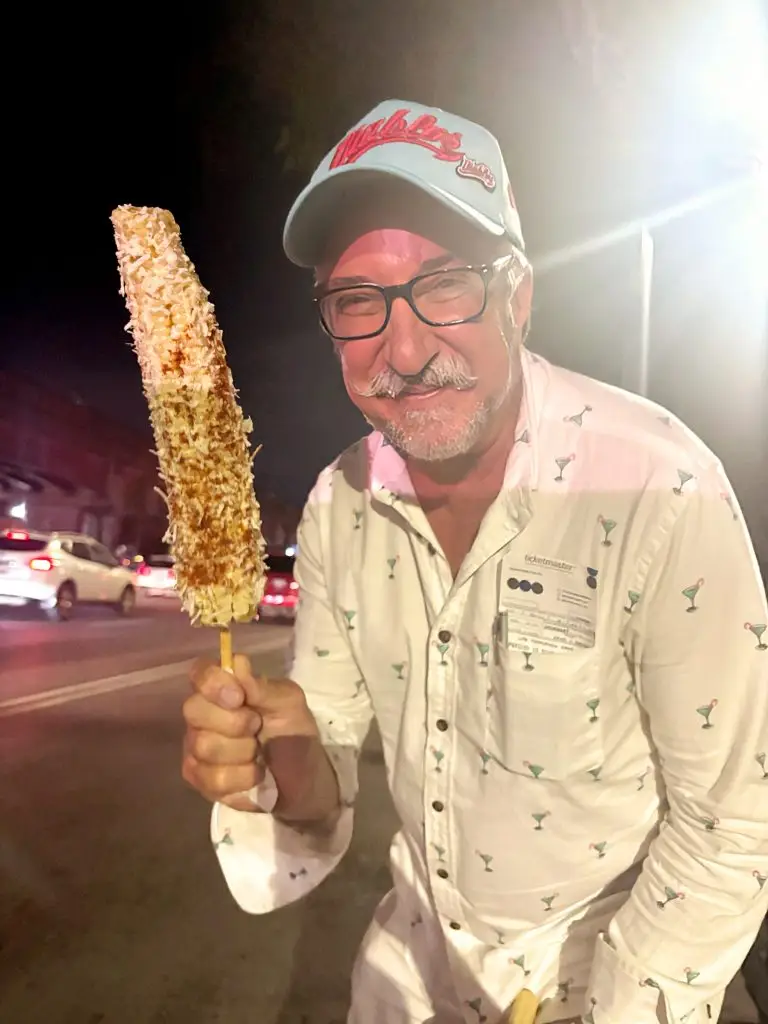
The stadium’s concessions include typical U.S. ballpark fare like hot dogs, hamburgers, popcorn, peanuts, and beer, but the real highlights are the regional delicacies including an array of tacos, tortas, quesadillas, and various sweets and deserts. Of course, there is elote (Mexican corn on the cob) charred on the grill and smothered in butter, mayonnaise, and cojita cheese. I bought one from a street vendor after the game.
Of particular interest to me were the Mezcal cocktails being concocted by real-life bartenders on the ballpark’s concourse. I enjoyed a Mezcal mojito and a flotador sorbet cocktail. Both were bright and refreshing and cost half of what they would at a bar in the U.S.
The entire experience felt very big league to me, and I came away from it with the feeling that I can’t wait to come back.