Citizen Science #31 by Jamie Zvirzdin
Citizen Science 2026: Chaos in Nature
It is strange to see our own breath appear before us on bright, frosty days. Invisible water vapor condenses to visible, light-scattering droplets, then evaporates to invisibility again as this breath-cloud swirls, thins and vanishes. Trying to grasp it leads to frustration.
Likewise, the concept of chaos is curiously, maddeningly, beautifully difficult to pin down. Defining chaos is itself a lesson in chaos. Despite advanced math classes on the subject, I’m still puzzling over how this word evolved across math and myth. This year, Citizen Science takes up the theme of chaos in nature—how it arises in our own bodies, ecosystems, the cosmos and everyday life.
And as I navigate a season of delightful chaos myself as my family moves from Germany to New Zealand (literally halfway around the world), I am grateful we will not face this topic alone. Several former Johns Hopkins graduate students, now respected science writers, have agreed to join us in examining chaos in the natural world. Thanks to Roberta McLain for stepping in to carry this column forward, alongside our indomitable editor Darla Youngs.
To begin, we need a working definition of chaos, since the word has itself evolved chaotically. For most people, chaos means utter confusion, even panic, a wild mess with no predictability or pattern whatsoever. But in mathematical circles, chaos is a deterministic system that follows exact rules yet changes wildly because the system is exquisitely sensitive to initial conditions. Is the definition of chaos order or disorder? A small shift in context—who is using the word “chaos,” and why—can produce a dramatic shift in meaning. In chaos theory, this “sensitivity to initial conditions” is the hallmark of chaotic dynamics. The word “chaos” is sensitive to initial conditions, so to speak.
The definition of chaos becomes more turbulent as we consider older meanings. The Roman poet Ovid, in his “Metamorphoses,” said chaos was an “undeveloped mass,” yet the older Greek word for chaos, χάος, came from the word for “empty space, yawning opening.” How can chaos be both a heap and a hole? A mass and a void? A something and a nothing, like our own breath on a frosty day? The meaning of chaos did not evolve smoothly over time. Instead, it stretched, folded, and branched across centuries, across myth, poetry, theology, meteorology, and mathematics. Such nonlinearity is also a classic feature of chaos.
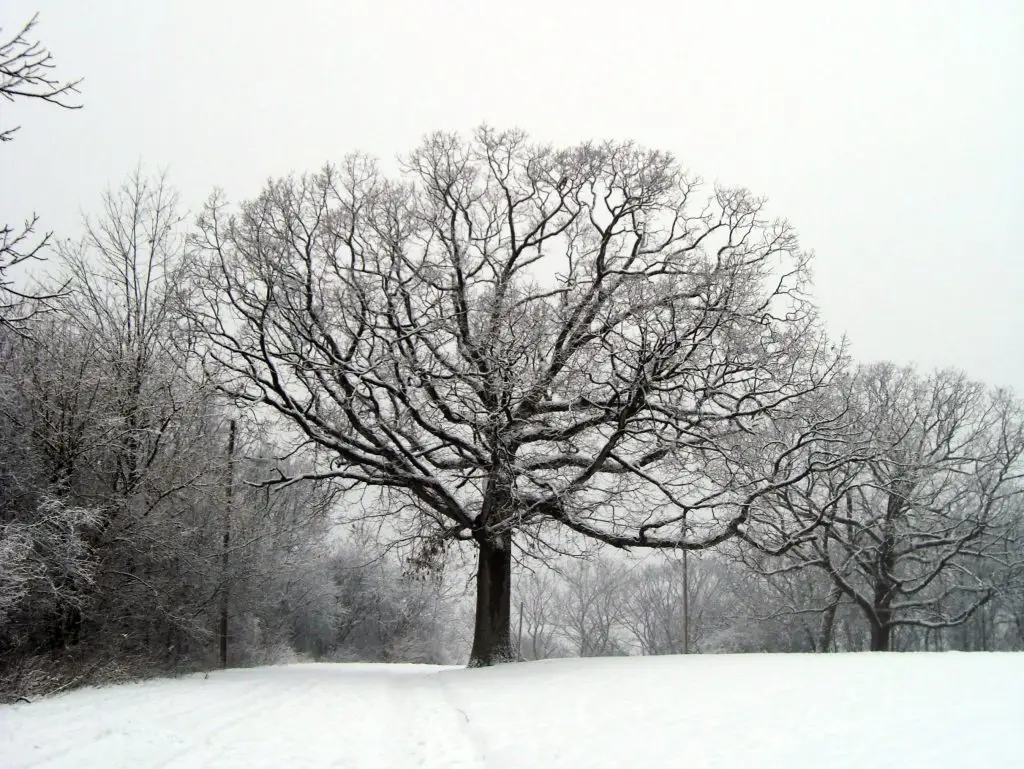
Although stretched across many meanings, chaos remains anchored within a familiar cluster of ideas: instability, unpredictability, emergence. Chaotic systems often generate fractals, patterns that repeat a crisp and lovely structure across scales. Nature is filthy rich with these fractal forms: coastlines, cloud banks, tree branches, seashells, lungs, lightning bolts, crystals, river networks, ferns, coral reefs, blood vessels, hurricanes, snowflakes, pine cones, spiral galaxies, interstellar gas clouds, even the large-scale web of galaxies stretched across the cosmos.
In each case, structure repeats across scales while confined to a region. In my favorite chaotic system, pouring a little cream into black coffee, my stirring stretches pale streaks into thinner filaments, forming swirls within swirls. The motion is confined to the cup, keeping the system bounded. Zooming in, we would see self-similar details, a fractal-like structure. Cream-swirls in coffee don’t last (diffusion blends them into a uniform brown, and the coffee is quickly drained to the last drop by me), but for a while, simple fluid motion generates a delicious nested structure.
In mathematics, chaos has a precise meaning. More broadly, in nature, chaos describes orderly yet precarious systems, nonlinear structures governed by rules but sensitive to disruption. Because narrow margins are shaped by constraint and tradeoff, even small shifts can tip stability and cause problems for us…and induce real panic.
The best part about chaos is that studying chaos in nature quiets our inner chaos. That is, our nervous systems appear wired to positively respond to certain forms of natural complexity. For example, in a landmark 1984 “Science” study, hospital patients recovering from surgery healed faster and required less pain medication when their windows overlooked trees rather than a brick wall. Lab experiments show that viewing mid-range fractal patterns—like those in trees, clouds and coastlines—reduces measurable stress responses and increases alpha brainwave activity associated with calm, alert focus.
Chaos in nature is therefore lawful, bounded and deeply familiar to us. When the world feels turbulent, step outside and slowly exhale into the cold morning air. Your breath-cloud will swirl, thin and vanish. The laws that shaped it will not.
Thanks for reading.
Jamie Zvirzdin researches cosmic rays with the Telescope Array Project, teaches science writing at Johns Hopkins University and is the author of “Subatomic Writing.”