
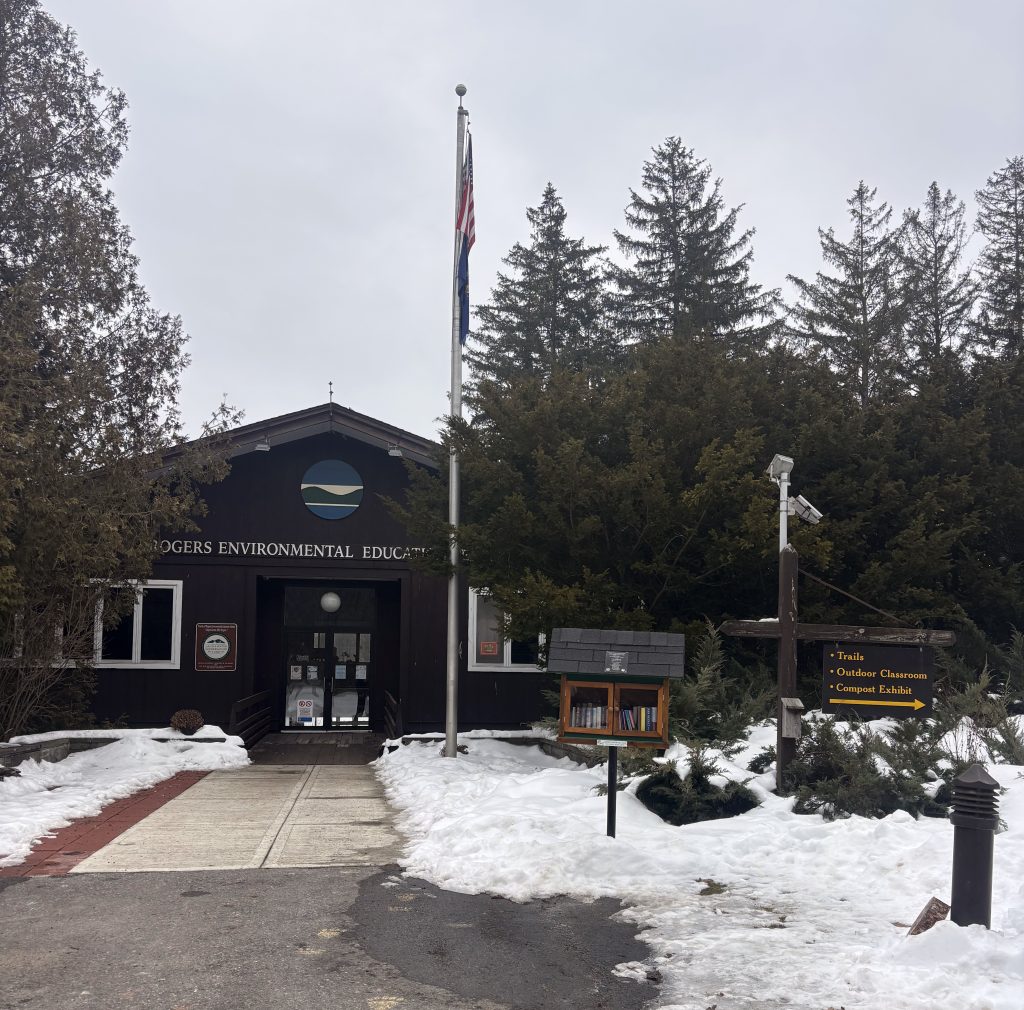
Rogers Center Celebrates the Outdoors, Winter Living
By ISABELLA BELMONTE
SUNY Institute for Local News
SHERBURNE
More than 70 local residents attended the Winter Living Festival at Rogers Environmental Education Center on Saturday, February 14. The annual event was in its 48th year, offering numerous public programs and science-based educational workshops for local families, young adults, and children.
From growing organic gardens to identifying winter birds, taking snowshoe walks, and ecology lessons, the Rogers Center in Sherburne promotes fun learning opportunities that are accessible year-round. The outdoor education facility’s team includes a mix of program leaders and educators, supported by partners like Trout Unlimited, Cornell Cooperative Extension of Chenango County and the Sherburne Rotary Club.
Most of the winter programs highlighted the science behind hibernation, pond ecosystems, migration and public health. Forest rangers also demonstrated ice awareness and cold water techniques. The ice rescue demonstrations gave insight into the aquatic plants and insects, amphibians, and fish that continue living under the water after wetlands and ponds are frozen over.
Wearing waterproof suits and using rescue sleds, the Rogers staff showed how to safely react in case of an emergency, such as if someone were to fall into a weak patch of ice.
Inside a small bird cabin was a variety of taxidermied birds: a mallard duck, ring-necked pheasants, an owl, a black-capped chickadee, a blue jay. More educators and volunteers sat at tables sharing informational pamphlets, including fast facts about migration habits and seasonal adaptations.
According to Mary Close, a nutrition educator from Cornell Cooperative Extension of Chenango County, “What our program does is build healthy habits, and that means working with families, young adults, and children on improving what they’re already doing and just changing some things with their diet or exercise. With low-income families, we save 50-80 percent off their grocery bills.”
Her message reinforced Rogers’ main philosophy of creating a space to make better decisions and empowering a positive impact through the use of natural resources.
Youth development experts Nicole Starkweather and Micaela Meseck, who specialize in natural resources and animal science, said that “4-H Youth Development is worldwide open to youth to learn and develop new skills, especially life-long skills to utilize throughout their life, from arts and crafts, to cooking, baking, and animal science knowledge.” This demonstrates how practical knowledge is gained beyond this annual event, ultimately shaping adulthood and stewardship habits.
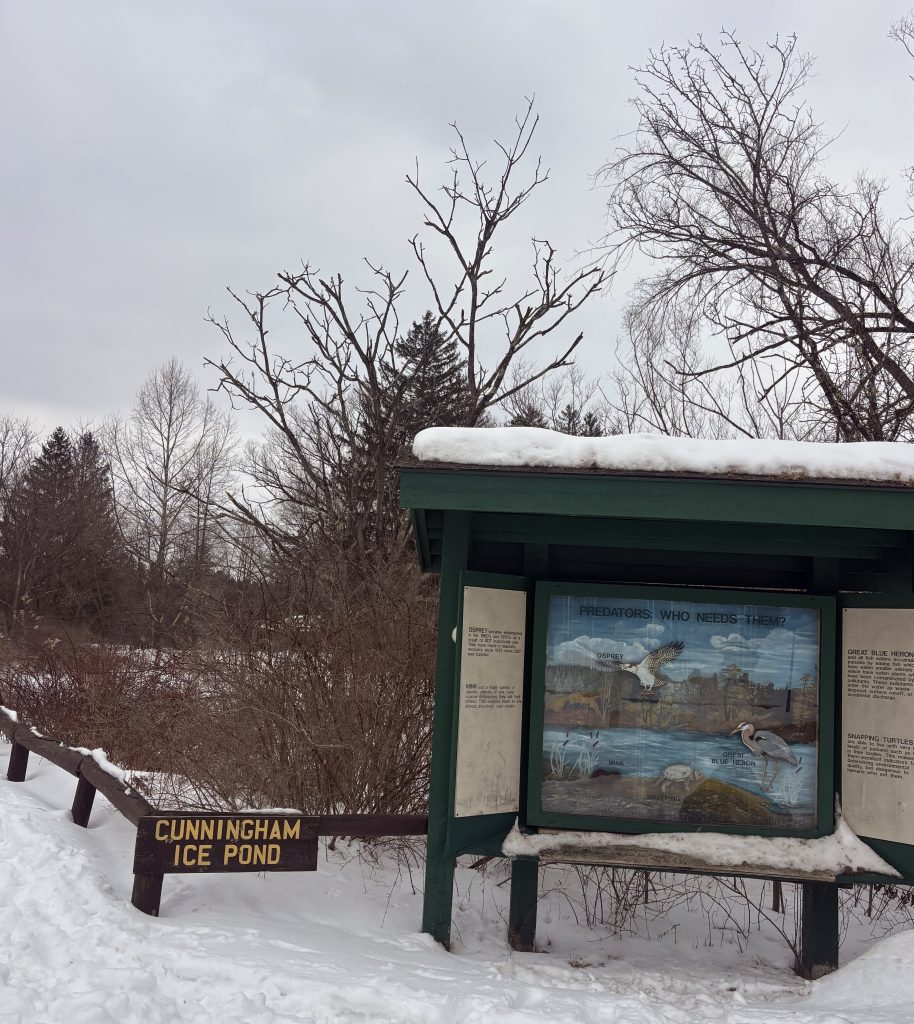
As visitors continued to walk along the trails, little billboards shared informational facts about the wildlife. For example, beavers are the largest rodents in North America and eurypterids located in the nearby pond that closely resemble horseshoe crabs are known for their large size, being able to grow over 8 feet long.
Food trucks and live music made the event feel very celebratory and fun, despite the cold weather. High temperatures were in the mid-30s, near-freezing.
Attendees at the Winter Living Celebration also took in the learning center, where guests explored the hiking trails, outdoor classroom and compost exhibit. There were also hands-on displays and activity sections with arts and crafts, communicating outdoor ecology in simple terms accessible to the younger audience.
Through teaching science and survival skills to conservation efforts and partner supporting programs, the Rogers Environmental Education Center exists not only to teach fun facts about our surrounding world, it helps participants to build healthy habits for everyday life.
This story was created by student reporters through the OnNY Community Media Lab, a program of SUNY Oneonta and the SUNY Institute for Local News.