
Tour with Eco-Yotta Officials Unpacks AI Research Center Proposal
By ERIC SANTOMAURO-STENZEL
ONEONTA
When Tirusha Dave and Prashanth Gorantala, a married couple from New Jersey, submitted a zoning proposal to the Town of Oneonta for their company Eco-Yotta Inc.’s hillside property, they weren’t expecting such a backlash. Things haven’t devolved into “Eddington,” a recent film about a rural community torn asunder by a mayoral election in the whirlwind year of 2020 while a data center grows in the background, but the tension is rising in meetings, online and on the campaign trail.
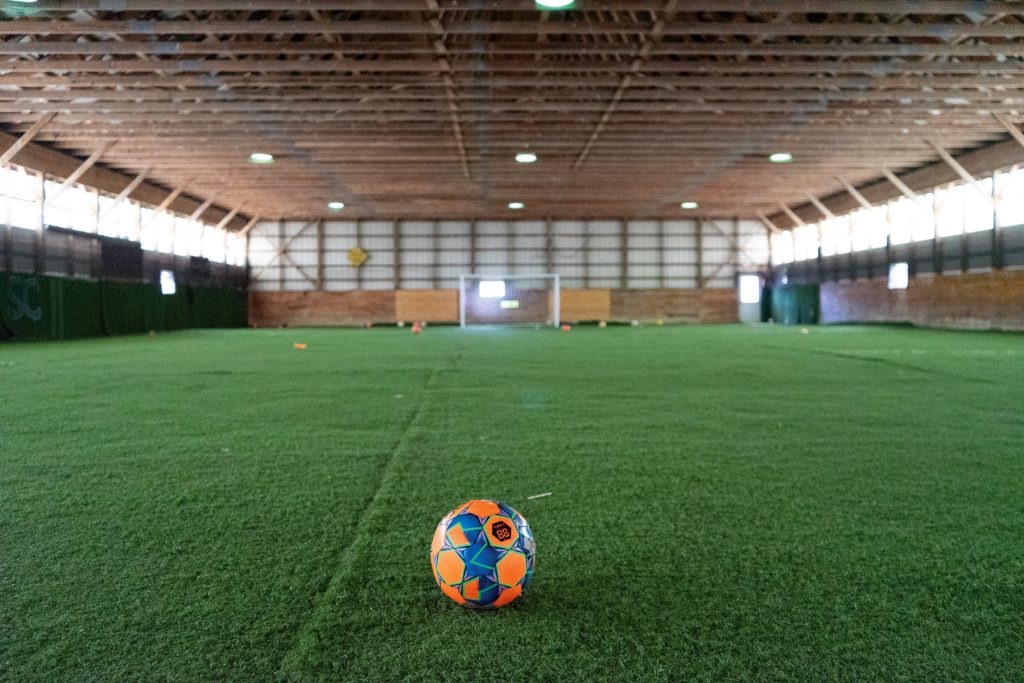
Utilizing its existing ~1,300-square-foot garage and ~10,000-square-foot barn at their property at 357 County Highway 9, Eco-Yotta plans to build a hydroponic farm managed by artificial intelligence research computers whose heat will extend the growing season to be year-round. The computers would also be used for projects by startup businesses and local students. The developers call their project an “agri-business” and have submitted a Planned Development District zoning proposal, which would allow a greater number of employees and business uses.

Dave, the chief executive officer, and Gorantala, the chief technology officer, say their original “data center” proposal was filed as an industrial rezone upon the recommendation of the town. Those application documents, obtained by AllOtsego, did not mention agriculture or hydroponics. Gorantala says “the narration went off the rails” because that original proposal–for a proof of concept for the heating without the crops and contained entirely within the garage–was interpreted by many as entailing new construction.
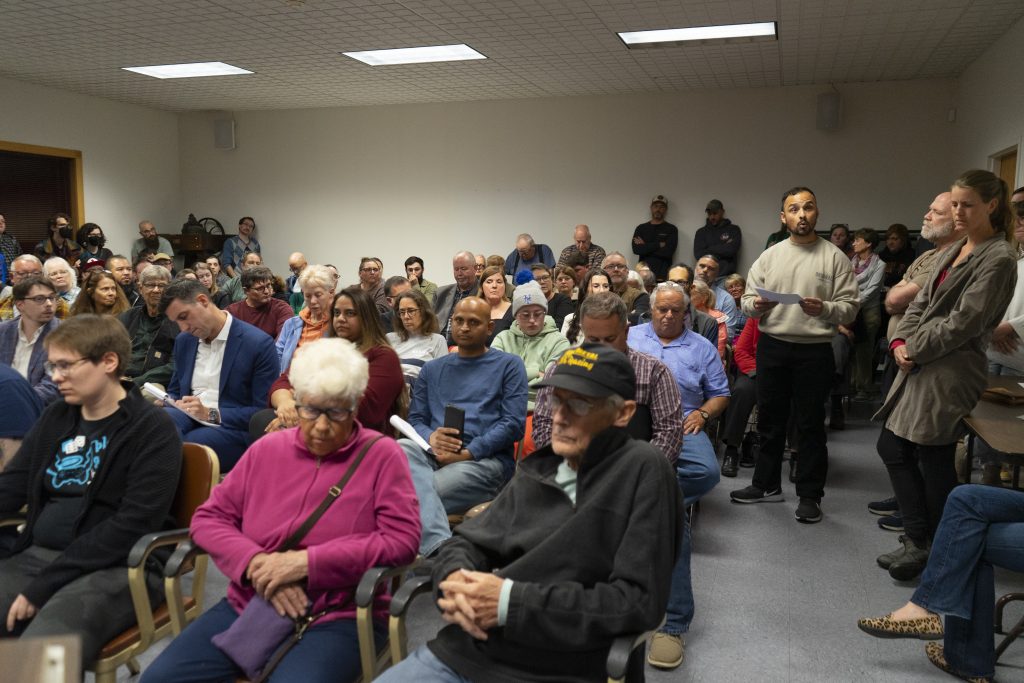
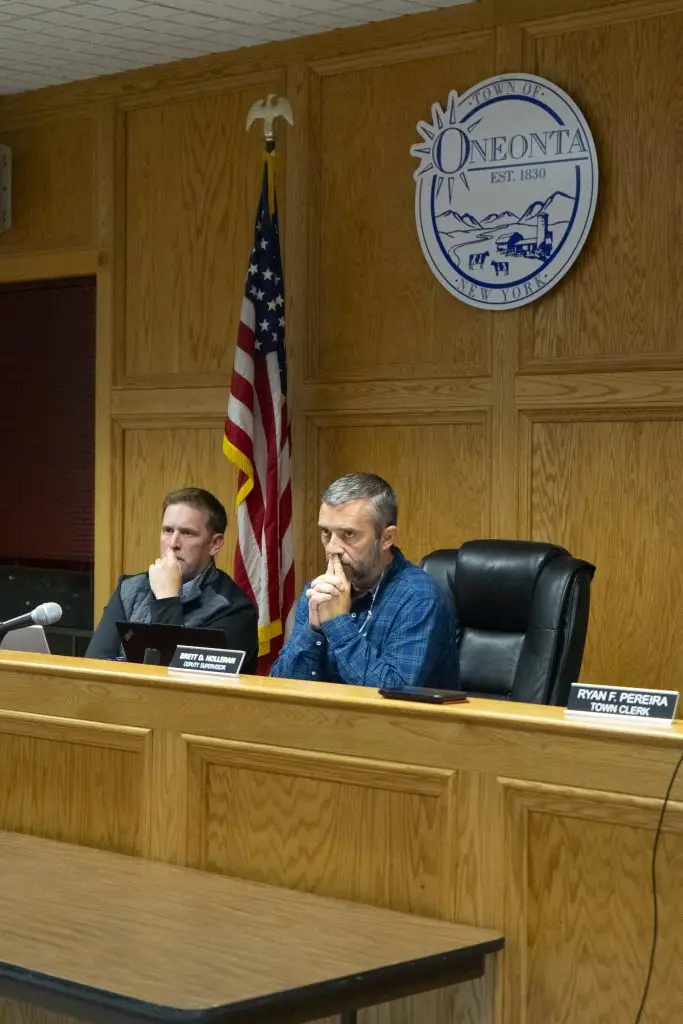
For several months, residents have been showing up to meetings en masse to oppose the proposals. Democratic candidate for town supervisor Will Rivera, who has since won the election, even drafted legislation to regulate AI data centers, making opposition core to his campaign. “Despite all the rebranding, one thing hasn’t changed: They’re asking to rezone 150 acres of residential and agricultural land into a PDD, giving themselves the keys to expand if they choose,” he said at the October board meeting.
A PDD, Dave and Gorantala say, would enable broader opportunities for collaboration with other businesses and educational entities, and the town could apply restrictions on additional construction. In parallel, Eco-Yotta’s attorney, T.J. Ruane of Whiteman Osterman & Hanna LLP, contends that the renovations are already permitted under its current residential agriculture zoning as a “home occupation.” Town code defines that designation as a profession “clearly incidental and secondary to the use of the dwelling for dwelling purposes and does not change the character thereof,” and limits such businesses to one non-resident employee.
The town’s top codes officer, Clinton Rearick, passed Ruane’s September 30 letter making the argument along to the town attorneys. Reached for comment on Monday for his assessment of Ruane’s legal arguments, Town Attorney Rob Panasci said AllOtsego could file a Freedom of Information Law records request. Eco-Yotta says they have yet to receive a response.

The fight is a microcosm of a growing national battle over AI and its social, environmental, and infrastructural impacts. Unlike the massive data centers cropping up across the country to power the AI boom, Dave and Gorantala argue that their project is an attempt to mitigate those negative impacts by offsetting them for agricultural purposes at a small scale, and in the long-term expanding similar projects to other farms across the region for “edge computing,” distributed AI computer infrastructure. Many opponents see no difference, calling it a rebrand of a proposal and technology facing heightened scrutiny.
What’s the Project?
“So everyone is saying that it’s a data center,” Gorantala said while walking toward the ~10,000-square-foot barn currently used for indoor soccer. “But it is not a data center. Let me try to explain: It is a hydroponics project.”
The first phase of the project would be in their ~1,300-square-foot garage. It would be a “small setup of servers that is like, you know, maybe 30 kW,” Gorantala said. “And using that heat produced from servers, we wanted to do research: What is the best way to harvest the heat and use that to heat the house?”
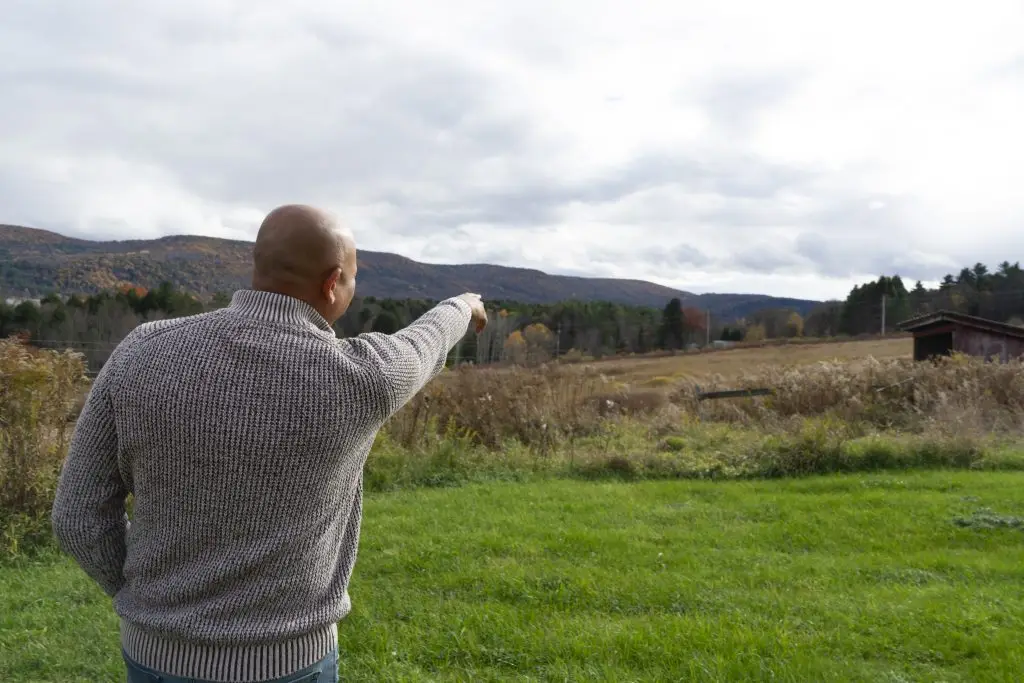
For phase two, Gorantala said while gesturing toward the barn, “we want to expand it here with hydroponics,” a farming method that does not use soil and is often inside. Everyone is talking about data centers, he said, “but we have to talk about, what is the size of the data center?”
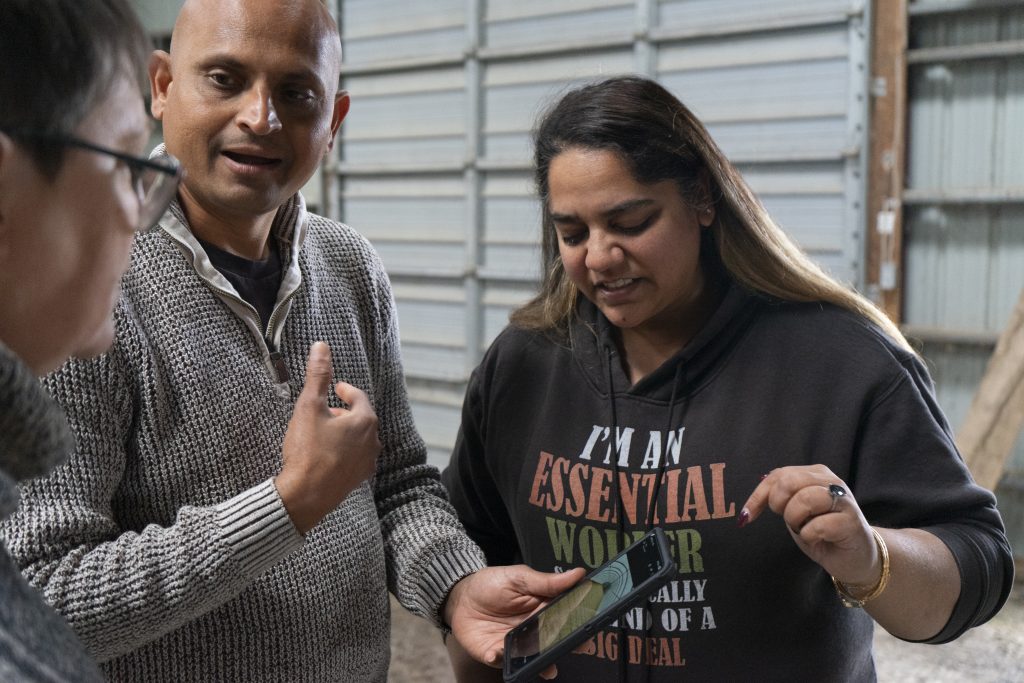
Once inside, Dave points to a corner of the barn, perhaps a tenth of its overall size.

“The servers that we’re talking about, it might take up this much space,” she said.
During the winter, Gorantala said, running a hydroponic farm would require enormous heating expenses and propane use. “Okay, how about if we remove that expense completely out of this business?” That is where the AI computers come in. In addition to providing the heat, they would automatically monitor a variety of crops and allocate resources according to their needs.
Dave says the return on investment could be as quick as two to five years depending on size. “The servers are merely a utility for heat production” where “it serves a second purpose, because now SUNY is able to utilize the AI servers for their students.”
They aim to have as many as 20 student interns.
Eco-Yotta has been in conversation with faculty and administrators at SUNY Oneonta and Hartwick College. At the October town board meeting, SUNY Oneonta Director of Community Affairs and Government Relations Caroline Williams read a statement confirming the university had reached a memorandum of understanding with Eco-Yotta to create educational opportunities, but that the university had no position or involvement on the location or construction of the facility.

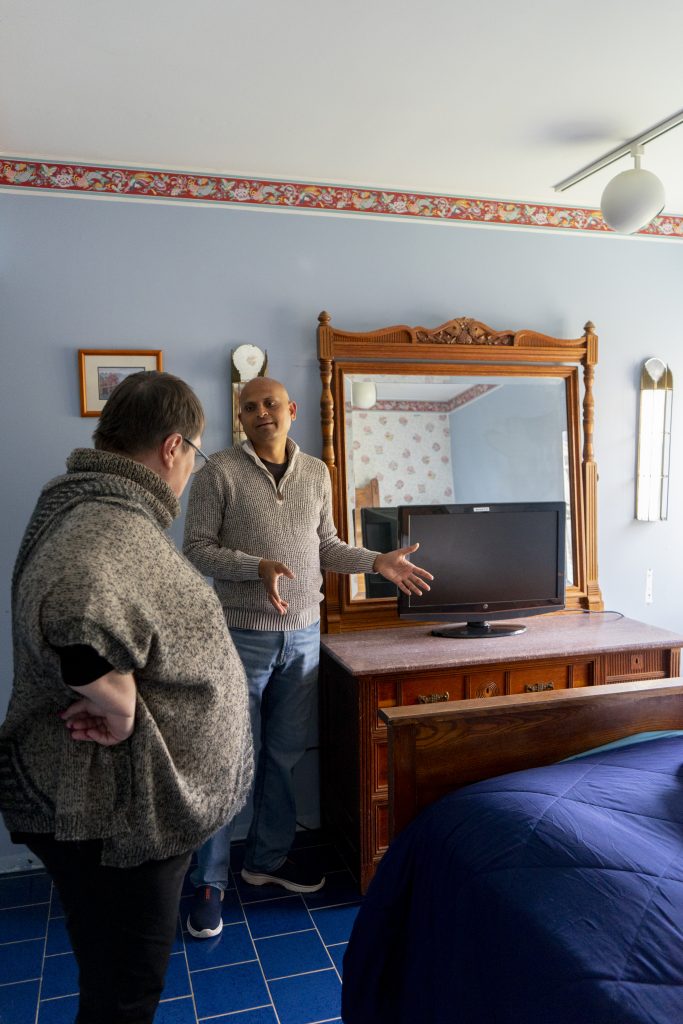
Eco-Yotta hopes to have the computing power to support startups and new software ideas. Both Dave and Gorantala having a background in childcare and education, he mentions an idea they had for a childcare analytics app to track a child’s growth and development. The two imagine that local students and business startups could come to them to use the AI computers in facilitating their projects. Inside the spacious home currently used as a short-term rental business, they hope to transform the dining room into a conference room and bedrooms into offices and storage spaces.
Eco-Yotta estimates the total cost of the project to be between $3.5 million and $5 million. For phase one, Gorantala estimated $1.5–$2 million, and for phase two $2–$3 million depending on construction costs. Citing his prior work constructing a farm in New Jersey, he plans to do much of the construction himself with outside assistance from student interns and contractors as necessary.
“They have been planning this,” said Otsego County Chamber of Commerce President Sean Lewis, who describes himself as a “connector” for the company, “and they have been talking to financial institutions, local financial institutions, to gain capital to do this.”
Facing Resistance
Some critiques of the project are untethered from reality. One accusation floated on social media without evidence, which has appeared in public comments against the project, is that Eco-Yotta is a foreign shell company, really based in India. Another claim circulated that Dave is an attorney for the firm Eco-Yotta hired about a month ago.
“I hope we don’t get, like, a bill from law school,” Dave recalled joking with Gorantala upon seeing the post. “I only remember getting my MBA, not my JD.”
Some of the opposition has been overtly racist. “Go back to your country,” read one anonymous message received through Eco-Yotta’s website.
Dave was born in the U.S., and Gorantala is a naturalized citizen.
“These are a couple of hard-working Americans who had a dream and are chasing that dream,” Lewis said.
The couple says the town has been misrepresenting or omitting portions of their proposal explanations in meeting minutes, particularly with regard to their commitments against new construction. Opponents have also complained about the quality of minutes, and the town recently began publishing video recordings of town board meetings.
Eco-Yotta says the town board’s unwillingness thus far to visit the property for a tour and to ask questions despite invites since as far back as July, posting its “home occupation” zoning clarification request on the town site, and not working with them to create restrictive PDD provisions, is evidence of its bad faith. Gorantala told AllOtsego that the “home occupation” discussion is “completely different from our application.”
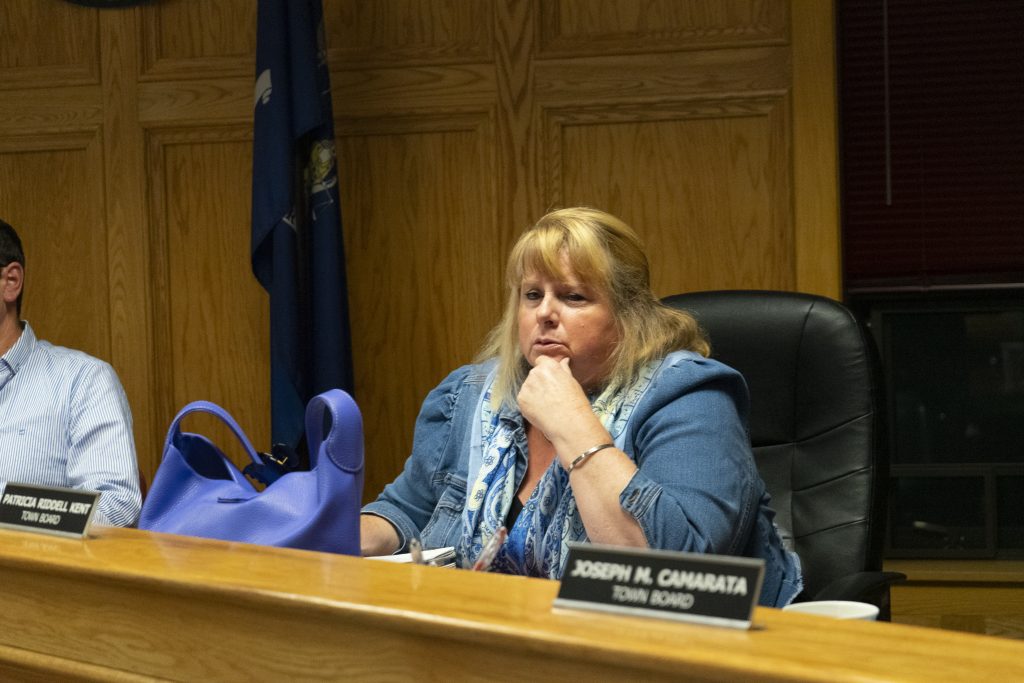
Gorantala took particular issue with Trish Riddell Kent, a Republican board member who has been one of the most outspoken opponents of the project. Gorantala claimed she has not been asking specific questions while at the same time “stating that ‘we have so many questions’ in front of everyone. But don’t you see, it is just for the applause she’s looking for.”
Kent shared prior statements from meetings with AllOtsego, but declined to comment for this article.
Addressing earlier implications of racism, Interim Town Supervisor Brett Holleran, and then-Republican candidate for a full term, said, “The claim of racism by any board member is absolutely absurd and unfounded. An audience member during a public comment period did in my opinion inappropriately use offensive language, however the board in no way, shape or form condones such rhetoric–we are to hear requests in a non-partisan apolitical manner.”
Holleran said he would be unable to confirm details on the minutes by press time.
Holleran says he is familiar with the property, having “spent a lot of my youth at that residence with the former owners.” Eco-Yotta has received “equal treatment and due process like every applicant.”
Rivera has also condemned racist comments against the project while maintaining opposition to it. Most critiques raised during public meetings have echoed national debates about AI and the data centers required to run it.
Kent, who has called for a local moratorium on data centers, said at the October meeting that “agri-business” is a “manufactured use of the term” and that “it is a substantial development proposal” unlikely to be a “home occupation.” She, and many others, raised concerns about electricity and water use, adding that there was not enough information about the project.

Some residents have objected to AI technology altogether, citing increasing reports on its negative impact on some users’ mental health, its frequent inaccuracies and potential to take human jobs.
Mirroring the kinds of advocacy AI optimists frequently use, Eco-Yotta sees AI as an inevitability to prepare for. Supporting “ethical AI,” Gorantala said, “We are at the start where it has to go in the right direction.”
Electricity
Over the river and through the woods just under a mile from the Eco-Yotta site is NYSEG’s Oneonta office. Criticism of Eco-Yotta’s project has dovetailed with widespread, bipartisan opposition to NYSEG’s ongoing rate hike proposal.
Eco-Yotta’s PDD application estimated 3,000,000 kWh per year of electricity use, the equivalent of nearly 300 homes as of a 2022 Energy Information Administration average home electricity use estimate. In response to power concerns, Eco-Yotta says they intend to build a small solar farm for their facility.
Eco-Yotta has also said NYSEG confirmed their project would not require power line upgrades. In an August 11 e-mail to leaders of the Otsego Chamber, Capital Energy Partners, and Otsego Now, NYSEG employee Carly Norton wrote that she received results of a “non-engineered capacity study for the proposed AI data center” and that upgrades would be required for the “requested 3.0 MW load at this location.” Reducing the load to 1 MVA would have no impact on the transmission system, Norton wrote. “If this is a location that your client is committed to, we will then develop a cost and time estimate to develop the upgrades.”
“Any additional load beyond this would require a load study, which is both costly and time-consuming,” Gorantala wrote to AllOtsego. “This means we have sufficient power to support the hydroponics operation within the existing structures, but no capacity for future expansion.”
In a statement, a NYSEG spokesperson wrote they “cannot discuss details about specific customers, however, NYSEG does frequently work with the Otsego Chamber on load requests to the grid. In that process, dependent on the requested amount of electricity, either an internal study by NYSEG or external study by [New York Independent System Operator] must take place.”
Asked about potential impacts on electricity rates, the spokesperson wrote “NYSEG’s rates ensures that existing customers are not impacted by costs new, large customers who may need upgrades to interconnect to the grid. That cost is borne by the new interconnecting customer. The only way NYSEG can change its rates is through the rate case process which is overseen by the Public Service Commission.”
Meeting Demands
The town’s Planning Board was skeptical of the proposal, and whether Eco-Yotta would stick to its limited scope, at its Monday, October 20 meeting. “This is not agriculture,” one member said, according to an audio recording of the meeting obtained by AllOtsego. Another member said, “I think it’s trying to fit a square peg into a round hole,” with others adding they did not have enough information and raising electricity concerns. Attendees applauded when the Planning Board voted that they were not in favor of the project.
Dave and Gorantala are adamant that concerns can be addressed by a well-tailored PDD restricting them from large-scale development in the way elected officials and community members have feared.
“Eco-Yotta has changed their business plan and [Zoning Map Amendment] request on 3 occasions,” Holleran wrote to AllOtsego. “We as a board have heard each application request and have allowed them to present their requests as we would with any other applicant. We have referred their projects for a preliminary review with the Planning Board as well.”
The growth Dave and Gorantala envision is laying the seeds for Oneonta to become a tech hub that retains local college students after graduation, and to spread similar AI hydroponic projects to other cold northeastern areas, potentially in a franchise model.
Dave said it’s for “small mom and pop little farmsteads every weekend on the corner of their driveway. It’s that population that needs the guidance and the assistance and the help so that they can survive and that they can thrive.”
In the property’s dining room, Lewis, the Otsego County Chamber president, said he was “just now starting to understand how hard these two individuals are working.”
“They’ve got full time employment,” he said. “They live a four-hour drive away, and they are here a lot, and they drive back and forth in the middle of the night.” Mentioning their Honda, Lewis said they’re not billionaires, as some have alleged.
If the project takes off, Gorantala and Dave say, they will move to Oneonta to see it through.
EDITOR’S NOTE: AllOtsego and its newspapers, “The Freeman’s Journal” and “Hometown Oneonta,” are proudly locally owned. In the news business these days, that’s rare. We need your help to keep AllOtsego for all of Otsego, not hedge funds hundreds of miles away who don’t care about the intricacies of local government or the milestones of everyday people like you. Can you subscribe, or donate, to our newspaper business? While donations are not tax deductible, rest assured they will be put to good use. When local media declines, corruption rises. Powerful people realize no one is watching and act accordingly. Getting you the news takes seven days a week, driving across the county, filing costly record requests, tech, phone, and other bills, and so much more. From finding human interest stories like a boat rescue on Otsego Lake to deep dives into controversial development proposals, reporting the news takes being a part of our community, knowing the micro-histories and relationships that make this such a special place. On such small margins, we couldn’t do it without you, dear loyal reader. (With your help, soon you’ll be a watcher and listener, too!) Support all of Otsego by supporting AllOtsego today.
Darla M. Youngs, General Manager and Senior Editor
AllOtsego, “The Freeman’s Journal” and “Hometown Oneonta”
PO Box 890, Cooperstown, NY 13326