
Invasive Species: Pesky Plants
Watch Out for Cow Parsnip (and its Cousin, Giant Hogweed)
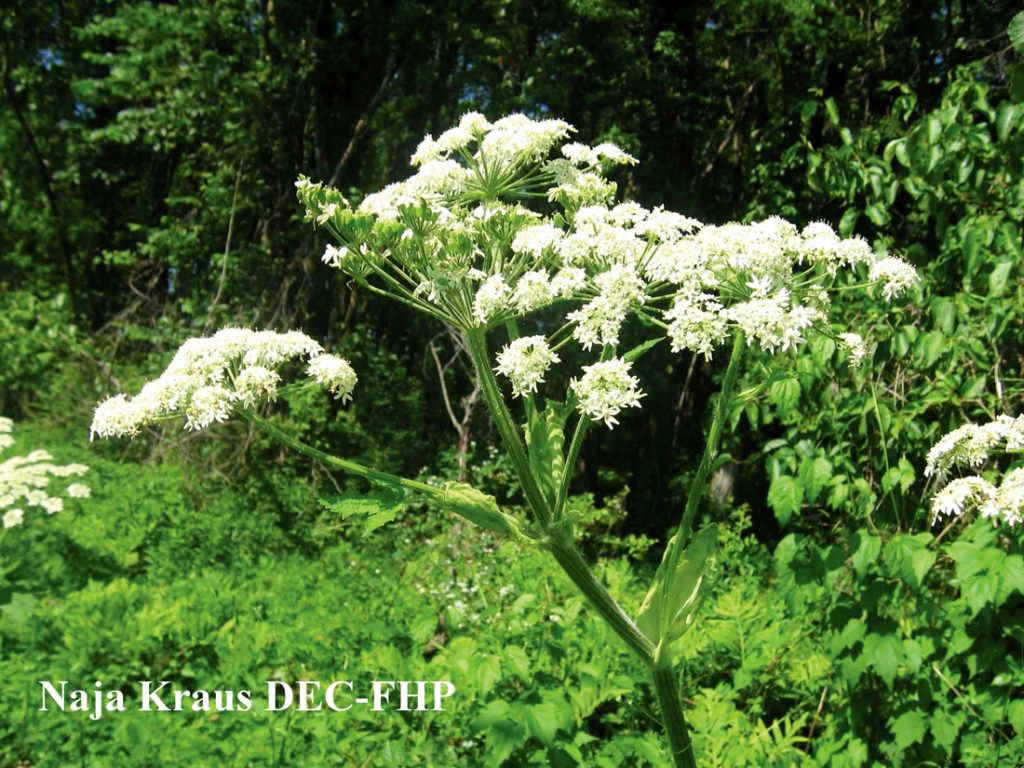
Cow parsnips (Heracleum maximum) are native plants but should be avoided, nevertheless. These can grow to six feet tall, especially if they are growing in partially shaded, moist soil. They tend to be uncommon but are often found in ditches along the sides of roads in our area. The flowers occur during the second year of growth. Cow parsnips bloom in May and June, with blossoms that look like large Queen Anne’s lace flowers in form and color. Some have more of a yellowish hue, looking more like the flowers of the garden herb, dill. Cow parsnips mostly spread by the many seeds that the flowers produce. Interestingly, these plants are often used by the beautiful black swallowtail butterflies as a source of food.
Cow parsnips aren’t invasive, so what’s the big deal? The sap from cow parsnips can produce a chemical burn on your skin if that area is then exposed to sunlight. This can appear as very small spots or larger blotches on hands, forearms and legs, but typically only on skin exposed to the sun. (Nudists beware!) A patient once presented to the Pediatric Clinic with fine red spots from his ankles to his mid-thighs and from his waistline up to and including his face. And yet his hands were spared. After taking a careful infectious disease history (there was nothing untoward) he reported that he had been weed whacking in a ditch wearing only shoes and socks, shorts, and gloves. Clearly, he had spread droplets of sap over many parts of his body while clearing cow parsnips from the area.
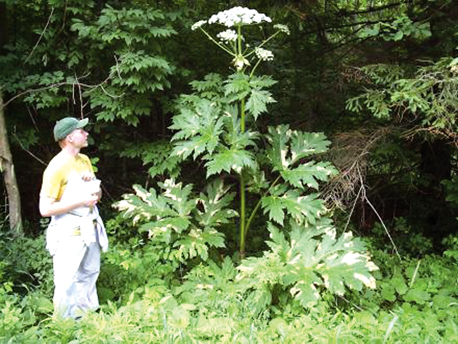
Giant hogweed (Heraculem mantegazzianum)—a related, introduced plant—is very concerning, however. It, too, has sap that contains the phototoxic chemical like cow parsnip but is much more toxic. Giant hogweed can grow taller than most men, up to 14 feet high. It is listed by federal agencies as a noxious weed and New York State even prohibits its possession. The flowers are similar to cow parsnip in form and shape but can be over two feet across. The main stem can be two-to-four inches in diameter. This is a very big and potentially dangerous plant growing in patches along streams and rivers. The Department of Environmental Conservation has guidelines for the safe removal of giant hogweed. Do NOT try to remove it without careful attention to these recommendations.
In the event of exposure to either cow parsnips or giant hogweed, immediately wash the area of exposed skin with lots of soap and water. Cover the area of contact to avoid sunlight. Seek the advice of a healthcare provider if a rash or other reactions occur. And, watch out!
Chris Kjolhede, MD, MPH, is an emeritus pediatrician at Bassett Healthcare Network.