SUNY Oneonta Professor Co-authors New Book
(Photo provided)
By BILL BELLEN
ONEONTA
On February 5, Bloomsbury Publishing released its latest new book, “Silencing Journalism by Murder?: An Overview of Six Global Case Studies.”
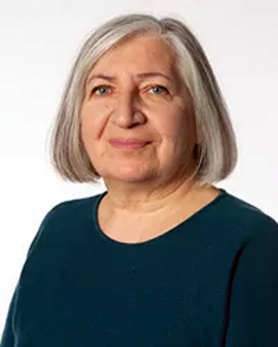
Co-authored by SUNY Oneonta media studies professor Gayane Torosyan, this book examines various case studies of journalists who were assassinated for doing their jobs.
Acknowledging a growing trend of violence against the press, “Silencing Journalism” aims to show readers the dangers of being the ones who cover controversy. Torosyan’s book critically examines the power of the local and global networks at play in the suppression of news media and the elimination of its journalists, peeling back the layers to reveal the ugly truths threatening freedom of information across the globe.
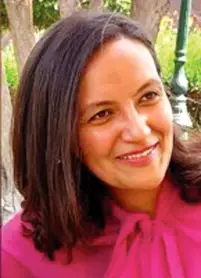
Torosyan is well-seasoned in the world of media studies and journalism, being a frequent contributor to AllOtsego as well as the seventh edition of Roy L. Moore and Michael D. Murray’s textbook “Media Law and Ethics.” She was born and raised in Armenia during its time as a republic of the Soviet Union, initially coming to the United States to attend first a master’s and then a doctoral program at the University of Iowa. It is here that she met fellow co-author Amani Ismail, who is now an associate dean of the School of Humanities and Creative Arts at the University of Hertfordshire in Egypt, hosted by the Global Academic Foundation.
“Because of our shared professors, we stayed in touch after graduation,” Torosyan explained. “Amani’s interests are political conflict and terrorism. My interest was media history.”
Torosyan noted their subjects of interest had natural overlap. Conversation between the two was sparked over the killing of Washington Post correspondent Jamal Khashoggi in late 2018, and from there the pair got to work trying to craft a new piece together. Each made sure to include examples that fit their areas of expertise and were relevant to their own personal background, allowing Torosyan and Ismail to inform their writings both in fact and in feeling.
Chapters of “Silencing Journalism” cover the murder of journalists the world over, from the recent deliberate killings of members of the press in Jenin, West Bank to the assassination of a former journalist-turned-presidential candidate in Ecuador. Torosyan particularly highlighted chapters two and seven, which cover the murder of journalists in post-Soviet Russia and Turkey, respectively.
(Photo provided)
Chapter two examines the murder of Anna Politkovskaya for her criticism of Russia’s war in Chechnya and its at-the-time rapidly-cementing dictatorship centered around Vladimir Putin. Chapter seven deals with the assassination of Armenian-Turkish journalist Hrant Dink, who preached values of reconciliation between Turks and Armenians before being killed by a member of a Turkish ultra-nationalist organization.
Torosyan said that Dink “was someone who wanted to broker collaboration between the Armenians and Turkish communities in Istanbul…Because he was saying that let’s forget about genocide, let’s put that aside, without disrespecting the victims. Let’s just move on. Let’s just live our lives…He got murdered for those words.”
Torosyan made it a point to delve into the implications of this murder, feeling a deep-rooted connection to it given her own Armenian heritage.
“My Armenian background informed my work strongly,” Torosyan said. “I chose to come here and live in America, and that means I’m not carrying with myself all the feelings [of] the conflicts that exist back home. So in that sense, my background informs my current work.”
Beyond the implications of these acts on the field of journalism itself, Torosyan and Ismail sought to paint a picture of the role society has to play in this all. The pair examines the power that the public has in preserving journalists’ right to investigate and criticize, as well as maintaining their own right to unfiltered news about the institutions that hold power over them.
“Societies are responsible to not only allow the journalists to speak, but also not to fear for their lives if they said something inconvenient. I felt that very close to home as I watched some of my colleagues back in Armenia being murdered. One was murdered in front of his house,” Torosyan stated.
As the safety of journalists around the world seems to continually degrade year after year, works like those of Torosyan and Ismail are important in revealing the scope of just how brutal this global network of systemic silence has become.
“On the one hand, you’re free to speak; on the other hand, you can be killed for doing your job,” said Torosyan. “And I think this is very unfair. There needs to be some protection. And it’s unrealistic to expect such protection, of course. But we can only dream.”
Those interested in learning more about these case studies and Torosyan and Ismail’s insights on them can purchase a copy of the book directly through Bloomsbury Publishing, via online retailers such as Amazon and Barnes & Noble, or locally at The Green Toad Bookstore in Oneonta.