
Celebrating a Multitude of Milestones on Memorial Day Weekend
By CHARLIE VASCELLARO
COOPERSTOWN
We’re only halfway through 2026, and it’s already been a big year for celebrating milestone anniversaries here in Cooperstown, across the country, and throughout the baseball community.
In conjunction with the ongoing celebration of the nation’s 250th anniversary, the first-ever “Hall of Fame Military Classic: A Tribute to Service and Sacrifice” exhibition game on Saturday, May 23 signaled the beginning of the summer season for the Hall of Fame and Cooperstown.
It’s a milestone anniversary for me, as well. Friday, May 22, 2026 marked the 50th anniversary of my first visit to Cooperstown and the National Baseball Hall of Fame. As a present for my 12th birthday on May 22, 1976, my father took his baseball-crazy son to Cooperstown. We flew out of Islip Airport on Long Island to the Oneida Airport just outside of Utica. I think we flew on Mohawk Airlines. My dad owned a plumbing company on Long Island at the time and attended many New York UA Plumbers Union conventions back then, and Utica was a place with which he was familiar. We spent the first night in Utica and the next night in Cooperstown. We stayed at The Otesaga Resort Hotel.
The Hall of Fame was a more modest museum back then, nowhere near its current size and scope; a half-century ago, it was more a collection of old shoes, clothing, and equipment. Toward the end of our visit, Dad told me I could pick out one item from the gift shop. I could have picked anything to bring back to our Setauket, Long Island home; a T-shirt, jersey or cap. Maybe a bat, a ball or a glove. Anything. The place was stocked with memorabilia that would have been the envy of all my friends. But there was one item that called out to me with a sentimental and nostalgic tone.
In the formative years of my baseball fandom, I spent a lot of time listening to Mets games on a transistor radio tucked under my pillow. Extending my bedtimes were the voices of the Mets’ mighty broadcasting triumvirate of Bob Murphy, Ralph Kiner and Lindsey Nelson. It was music to my ears. And now, in the gift shop, I could barely believe my eyes. There in front of me was an album cover bearing big, yellow letters reading, “Ya Gotta Believe.” Underneath, smaller type promised “all the exciting play-by-play action highlights and interviews of the Amazin’ Mets 1973 end of season play-offs and World Series Championship Games.”
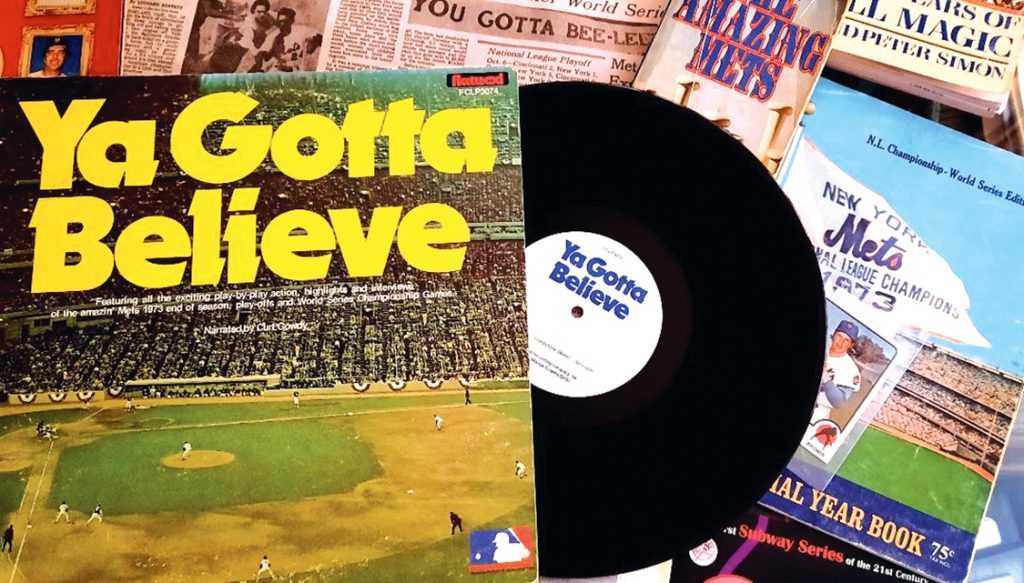
I had struck gold. “Ya Gotta Believe” was the battle cry of the 1973 Mets. The memories of that season were still fresh in my head—what an opportunity to relive the favorite year of my so-far brief life. If I could have traveled back to any year back then, or even now, it would have to be 1973, the defining season of my life as a Mets fan.
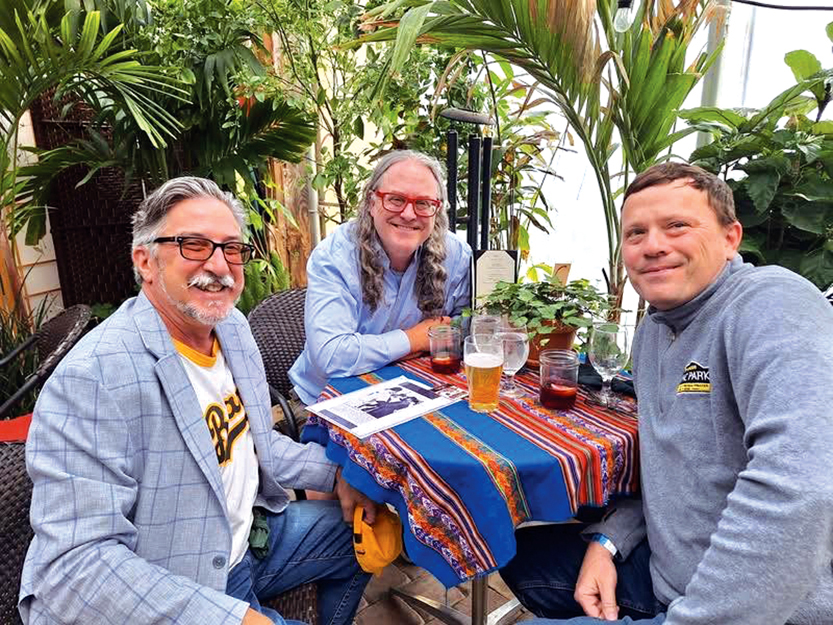
It was the beginning of a love affair that I’ve had with this beautiful little town for 50 years and running. I’m not sure how many birthdays I’ve spent here. This is my third in a row and I know there have been many more, but this one feels special. I celebrated my birthday with former Hall of Fame Library Director Tim Wiles and author and Co-Director of the NINE Spring Training Conference, Willie Steele. We had an enjoyable lunch at the Origins Café.
Rick Monday’s Great Play
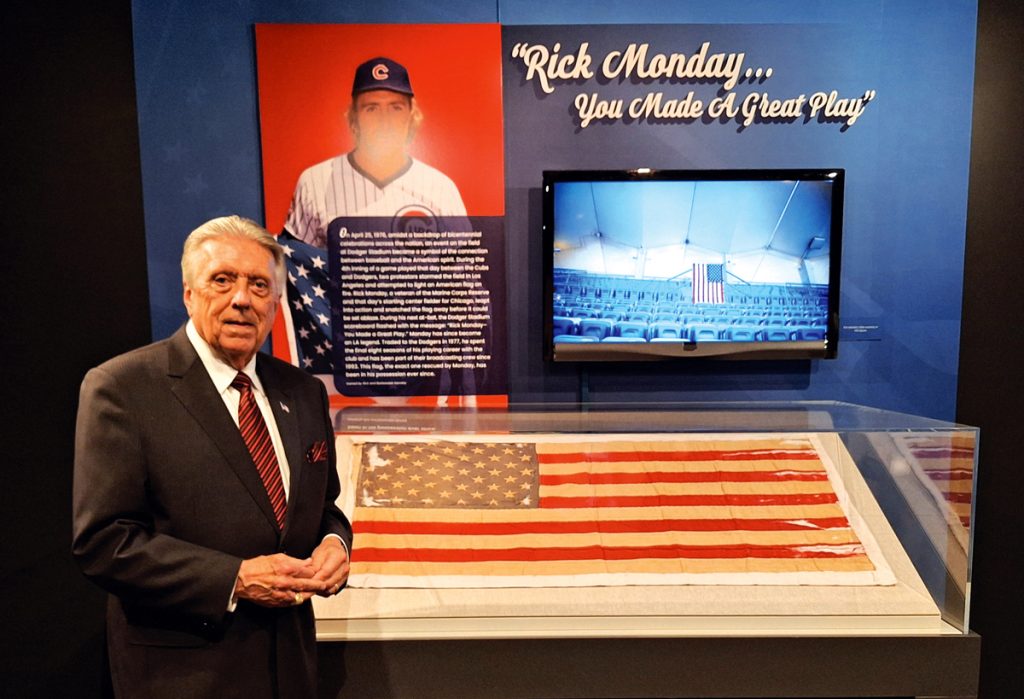
Another 50th anniversary is being acknowledged in a new display at the Hall of Fame commemorating April 25, 1976, the day when former Chicago Cubs center fielder and Marine Corps veteran Rick Monday prevented two protestors from burning an American flag on the field during a game at Dodger Stadium.
As the Cubs players were warming up prior to the start of the bottom of the fourth inning, two individuals found their way onto the field. Running out to a spot in left-center field, they spread an approximately 2’ x 3’ American flag on the outfield grass and began dousing it with lighter fluid. After one failed attempt to light it with a match, Monday swooped in and snatched the flag away from them.
The older of the two individuals attempting to burn the flag was later identified as William Errol Thomas Jr., 37, a Native American member of an Indigenous community from Maine. The younger person, a minor, may have been his son or nephew.
In a recent blog post written by writer/researcher Bill Staples, according to Thomas Jr.’s father’s 1958 obituary, “Thomas…was also a Marine Corps veteran—just like Rick Monday.”
Thomas was also connected to baseball history as the step-grandson of Louis Edward Sockalexis, nephew of Louis Francis Sockalexis, who became the first Native American in Major League Baseball history with the Cleveland Spiders in 1897.
(Photo by Charlie Vascellaro)
When he was arrested and booked for trespassing, AP news sources reported Thomas claimed that his actions were “a protest against the discrimination of American Indians and a lack of interest in their plight.”
Monday was on hand for all of this year’s Memorial Day weekend events and participated in a conversation on Friday, May 22 with Hall of Fame Manager of Digital and Outreach Learning Bruce Markusen as part of the “Baseball’s American Voices” series. At the time of the incident, Monday said he knew nothing about the reasons for the protest, but he knew that entering the field of play was against the law and said, “It was easy for me to make a quick decision between right and wrong,” adding that he was protecting “the rights and freedoms represented in that flag,” which ironically enough, include the rights of the protestors to do what they were doing.
The rescued flag is displayed on the museum’s third floor under a headline wrapped in quotes reading “Rick Monday…You made a great play,” in reference to a message posted on the Dodger Stadium scoreboard immediately after Monday intervened. The flag will remain on display through Labor Day, marking the longest time it has been in one public location, and is on loan from Monday, who has preserved the flag since that day during America’s bicentennial.
Another 50th: ‘The Bad News Bears’
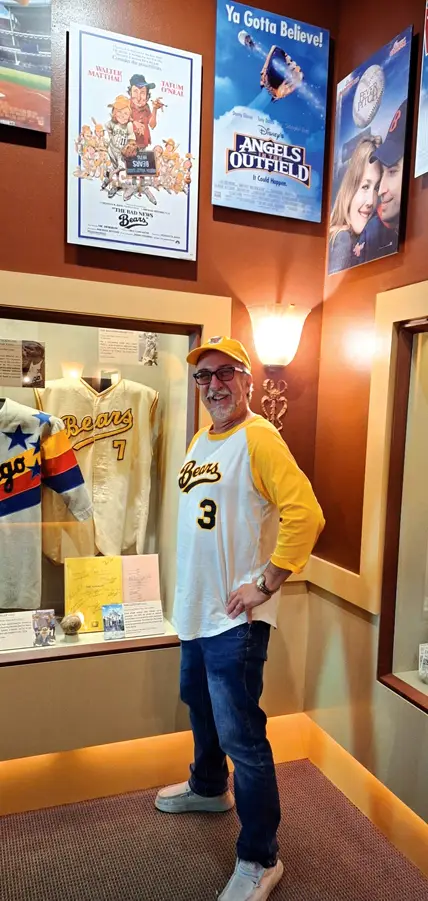
This year also marks the 50th anniversary of the release of my favorite film of all time, “The Bad News Bears,” starring Walter Matthau, Tatum O’Neal, Jackie Earle Haley and Vic Morrow, released in April of 1976. While there was no special presentation made, the movie is represented in the Hall of Fame’s permanent “Baseball at the Movies” exhibit on the first floor, behind the “Scribes and Mikemen” display and near the Hall of Fame Library.
(Photo provided)
Original ‘Rules of The Game’ on Display
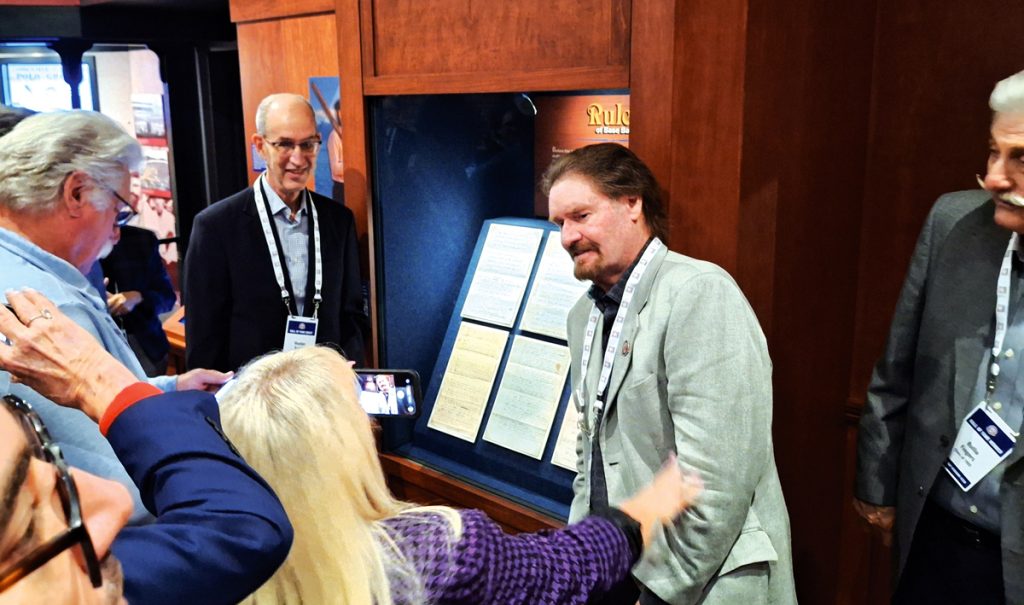
Yet another new exhibit making its debut this Memorial Day weekend, “The Rules of Base Ball” the documents originally penned by members of the Knickerbocker Base Ball Club in 1957 were purchased at auction by fan and former American League office employee Hayden Trubitt, who has loaned them to the museum.
“I bought the documents in an auction from SCP (Sports Memorabilia Auction and Consignment) in 2016,” said Trubitt, adding that there are two different authors of these documents—Doc Adams and William Grenelle. The documents were sold by the Grenelle family and first auctioned by Sotheby’s in 1999.
“I’ve been interested in baseball rules all my life,” said Trubitt. “In fact, as a boy it was one of my marks of interest, and between college and law school I worked in the office of the American League and one of my functions there, because no one else would do it, was when people from all across the country would call in with their rules questions based on things that actually happened right in front of them. I would answer the phone and give my best answer to their questions,” said Trubitt, who worked in the American League office under Lee MacPhail in 1975 and 1976.
(Photo by Charlie Vascellaro)
“It makes sense for [the documents] to be here. The Hall of Fame is about the history of baseball, and they deserve to be here and I’m happy to share them with everyone so they can learn about these things that were basically newly discovered just before I bought them,” said Trubitt.
Museum visitors can experience the “Rules of Base Ball” via the new exhibit, and the documents can be viewed in their entirety online.
Game Cut Short, but Plenty of Pomp and Circumstance
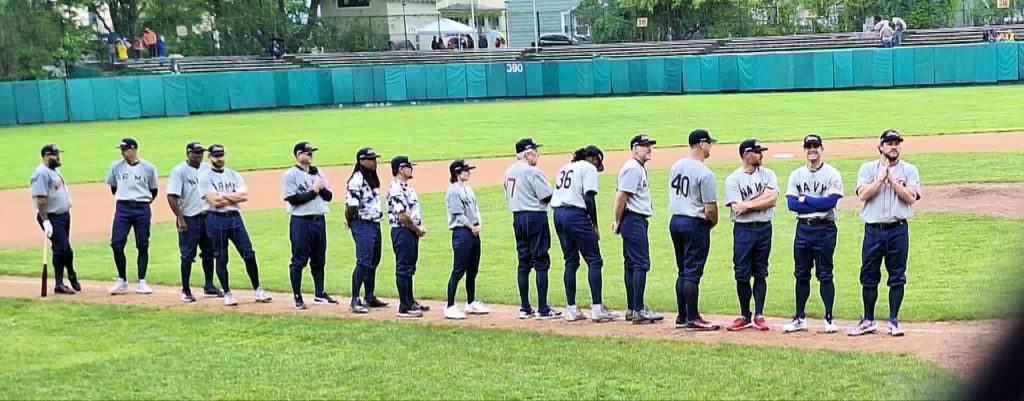
Saturday’s main event, the Military Classic and pre-game Home Run Derby, ended up being more about the weather than anything else. A smattering of fans braved the elements while the participants sloshed through the proceedings.
An interesting array of players from various walks of life dotted the rosters of the “Stars” and “Stripes” teams, wearing uniforms representative of the various service branches of the U.S. military. Hall of Famers Wade Boggs (Marines), Todd Helton (Air Force), Tony La Russa (Army) and Jack Morris (Navy) served as coaches for the Stars team and wore uniforms respective to those military connections.
Rollie Fingers (Army), Fergie Jenkins (Navy) and Scott Rolen (Navy) coached the Stripes.
Other former major leaguers participating in the Military Classic included: Nick Ahmed, Danny Graves, Ian Kennedy, Jonathan Lucroy, Josh Reddick, Todd Zeile, Brad Ziegler, and Jonny Gomes, the winner of the pre-game Home Run Derby.
(Photo by Charlie Vascellaro)
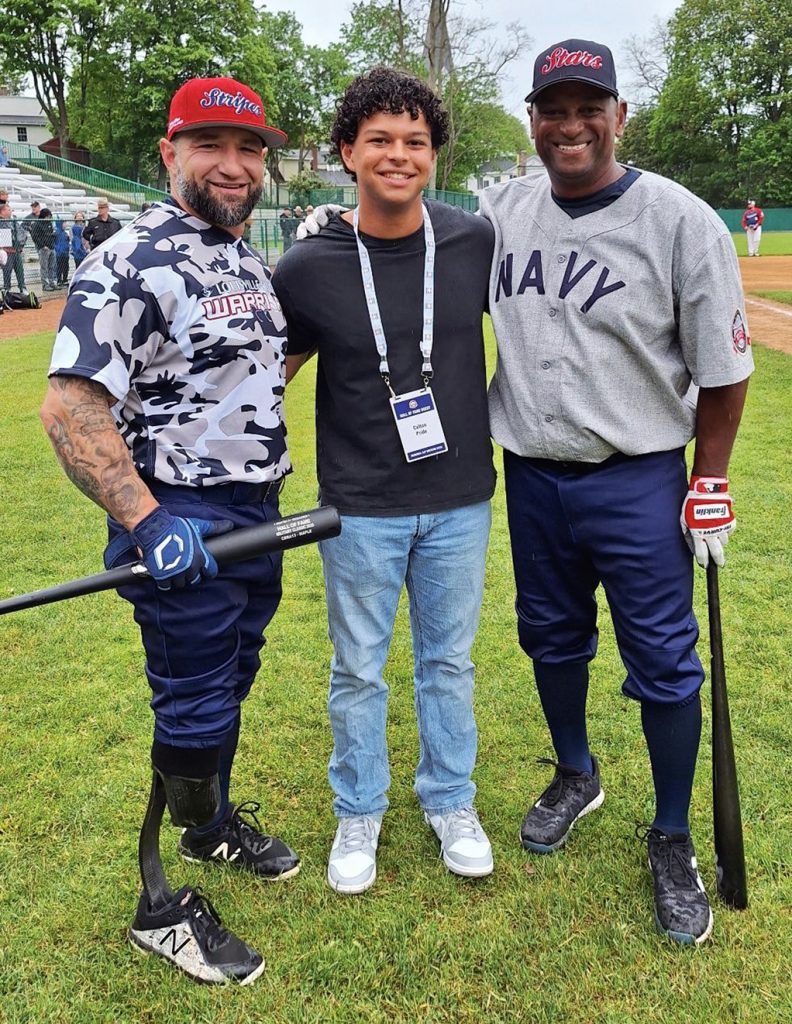
Four members of the Louisville Slugger Warriors—a competitive amputee baseball team that consists of U.S. military veterans, active duty personnel, Wounded Warriors, and current and former amputee college baseball players—participated in the Hall of Fame Military Classic, including: Carlo Adame, U.S. Army sergeant first class who served three tours in Iraq; Kenny Celeste, a U.S. Navy chief petty officer who served in Iraq and Afghanistan; Lonnie Gaudet, a U.S. Army sergeant who served in Afghanistan; and Derrick Victor, a U.S. Air Force technical sergeant who served one tour in Iraq and two in Afghanistan.
Lonnie Gaudet, who served in Afghanistan in 2010 and 2011 and lost a leg when he stepped on a land mine, said he was inspired to get back on the ballfield after seeing a double-amputee playing ball on an episode of the “Good Morning America” news program.
“When the team received me, it happened quickly. Everybody was working so hard to get back into playing shape. You had no choice but to do it,” said Gaudet.
Former major league outfielder Curtis Pride, who overcame hearing loss during an 11-year career, is an active coach for the Warriors and also played in the brief game that lasted only one inning due to the steady rain that turned the field into mush and made it impossible to maintain.
“These guys serve as an inspiration for many, many people,” said Pride, who was asked to be a coach by Louisville Slugger Warriors General Manager Dave Van Sleet.
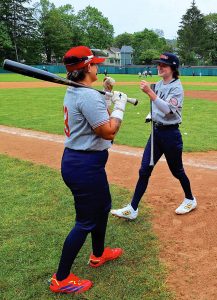
Two members of the inaugural Women’s Pro Baseball League were also on the Stars and Stripes rosters, including outfielder Brittany Apgar and catcher Alyssa Zettlemoyer. Zettlemoyer, 19, was informed of the possibility of playing in the game in an e-mail she received from the WPBL office.
“They told us about this event and that they could select two of us to come here. They asked us if we had family members in the military, or had served ourselves, or had any involvement with the military, and what our involvement was, and how it affected us and how we connect baseball to the military. I did, and I was lucky enough to get picked as one of the two,” said Zettlemoyer, whose mother and father both served.
“My mom joined the Marine Corps early after 9/11 and my dad had served for 20-plus years. I’ve had a lot people on my dad’s side going back generations that have also served in the military. I put all that in there and apparently it was enough,” said Zettlemoyer, who signed with the league New York team as a catcher.
Night at the Museum
The WPBL season opens on August 1 at Robin Robberts Stadium in Springfield, Illinois. Both Zettlemoyer and Apgar, who plays for the Los Angeles WPBL team, also participated in the Hall of Fame’s “Night at the Museum” photo op session, providing fans with the opportunity to take photographs with players at various stations throughout the museum.