Coop Cowboys Work To Build an Inclusive Sandlot Community
By JOSHUA YOUNGQUIST
COOPERSTOWN
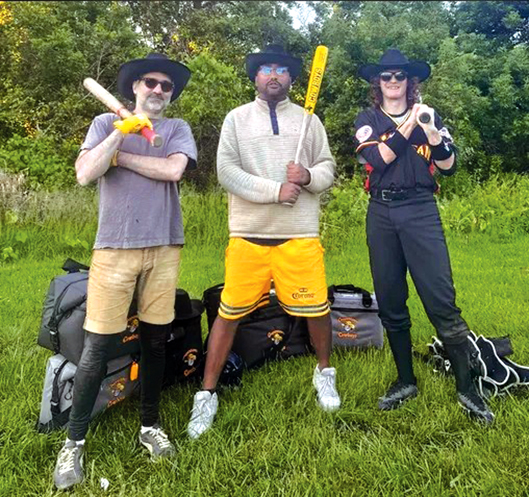
The Cooperstown Cowboys are working to build a version of baseball that looks and feels different from the competitive, stats‑driven culture many adults remember. Their guiding philosophy—that “ballers of all ages, creeds, skill levels and backgrounds are welcome”—is more than a mission statement. As organizers Gabriel Santos, Derik Rich and Andrew Jimenez put it in a recent interview with AllOtsego, “Those words were chosen specifically because we are looking for people from all walks to experience baseball.”
They describe Major League Baseball culture as “very competitive and ‘heady’ in its focus on stats.” Sandlot, they said, is intentionally the opposite: “It’s for both the heads and other folks who wouldn’t otherwise be into baseball, to allow them to experience the fun of the sport.”
That approach matters for adults who haven’t played in decades. Many arrive unsure whether they can keep up or whether they’ll feel out of place. The Cowboys address that directly by creating a supportive environment from day one.
“First and foremost, we create a supportive, welcoming environment for everybody,” organizers said.
Every player signs a code of conduct promising not to engage in abusive or derogatory behavior, and the team enforces it. The code also emphasizes cheering for the other team and supporting players even when they miss a play.
“It’s normal for new players to worry they might not be able to keep up,” they said. “But once they play their first game, they find out the culture of the league has room for players of all backgrounds and skill levels.”
With a minimum age of 25 and a roster that skews older, they added, “We’re always checking in with one another to make sure players aren’t overexerting themselves.”
For first‑time players—including those who have never taken a live pitch—the Cowboys ease them in through early‑season scrimmages. These sessions are “very laid‑back affairs that involve training, batting, and fielding practice.” Pitchers aren’t trying to overpower anyone. “Pitchers in our league aren’t throwing 70 or even 60 mph,” they said. “They’re trying to put it over the plate so the ball goes into play.”
Weekly practices deepen that sense of belonging. They give players a chance to build friendships, get outside and enjoy the game without pressure.
“It gives people the opportunity to build community and friendship while getting exercise outdoors in this beautiful part of the country in which we live,” the trio of organizers explained.
Practices help create “a welcoming environment where people can be their true selves while playing a fun sport in a supportive, co‑ed league.”
Scrimmages and open practices also help bridge gaps across age groups, backgrounds and skill levels.
“Practices exist to be the place that people can show up and there’s absolutely no expectations,” they said. Scrimmages mix uniformed players with newcomers who are just testing things out. “All it takes is one piece of friendly advice during a practice or scrimmage for someone who was on the fence to level up and find a new skill or position they didn’t know they love.”
Inclusivity is built into the team’s culture, not added on top of it.
“Many of our players are members of the LGBTQ+ community, so those inclusionary practices are built into the way we interact with each other off and on the field,” Cowboys officials said. The code of conduct provides the framework, but “it’s the people who put those rules into action, and we have a supportive group of people who all love playing baseball.”
As the Cowboys grow, they’re also looking for ways to expand access. They’re grateful for early sponsorships—“Shoutout to AO Coolers and Freeman’s [Journal]!”—but field access remains their biggest challenge.
“Without consistent practice, we look disorganized and prospective players lose interest,” they said.
They hope local schools might partner with them, similar to a model used by their sister team in Albany: the team maintains the field and, in return, gets to use it for practices and games.
“We would love a mutual‑aid partnership like that with someone here in the home of baseball.”
Sandlot baseball has a national culture shaped in part by SandlotRevolution.com.
“We share and represent the core values of the national organization,” they said.
Being located in Cooperstown has also given the team a unique draw.
“Players travel from as far as Texas, San Francisco and Vancouver specifically to play at Doubleday,” they said. “It’s a drop in the bucket compared to the Hall of Fame or Dreams Park, but sandlot has its own draw.”
Looking ahead, the Cowboys have a clear vision for the next few years: “a more than full roster, a field to call home, and partnerships with local businesses and community aid groups to bring people together around the love of baseball and give back to the community at the same time.”
Those interested in learning more about sandlot ball and the Cooperstown Cowboys can reach out via playballcooperstown@gmail.com, at @NYSandlot or @CooperstownCowboys on social media, or go see them take on Team Alcatraces at 2 p.m. on Saturday, June 20 at Damaschke Field in Oneonta.
Editor’s Note: “The Freeman’s Journal,” “Hometown Oneonta” and AllOtsego are sponsors of the Cooperstown Cowboys.