

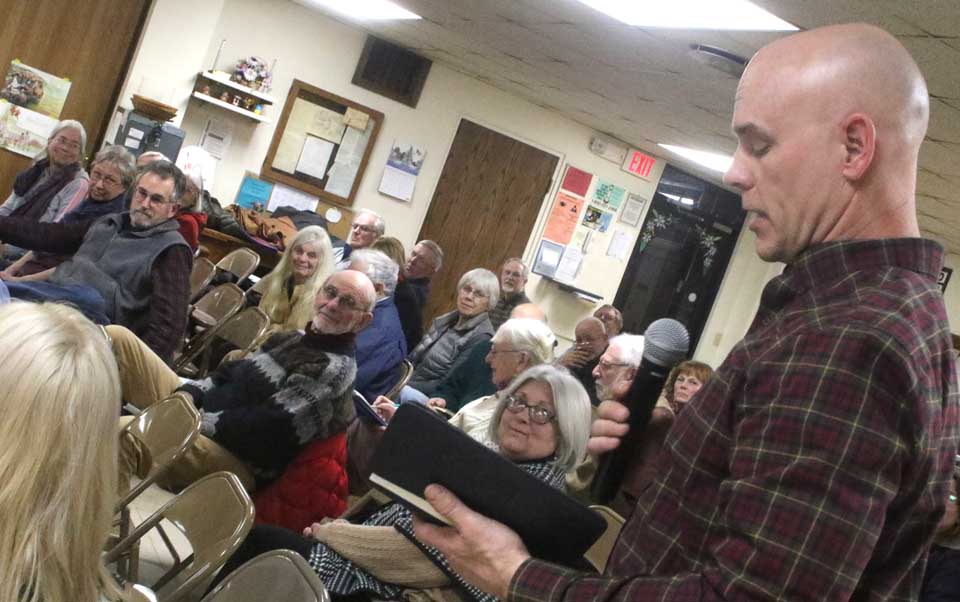
70-80 ATTENDEES FILL ROOM
Energies Of Future
Promoted At Forum
Among Them, Solar, Wind, Geothermal,
Pellets Seen As Fossil-Fuel Replacements
By JIM KEVLIN • Special to www.AllOTSEGO.com
ONEONTA – Fossil fuels – gasoline, fuel oil, propane and natural gas – that power Otsego County today were like an unexpected inheritance, allowing the Industrial Revolution and the world as we know it.
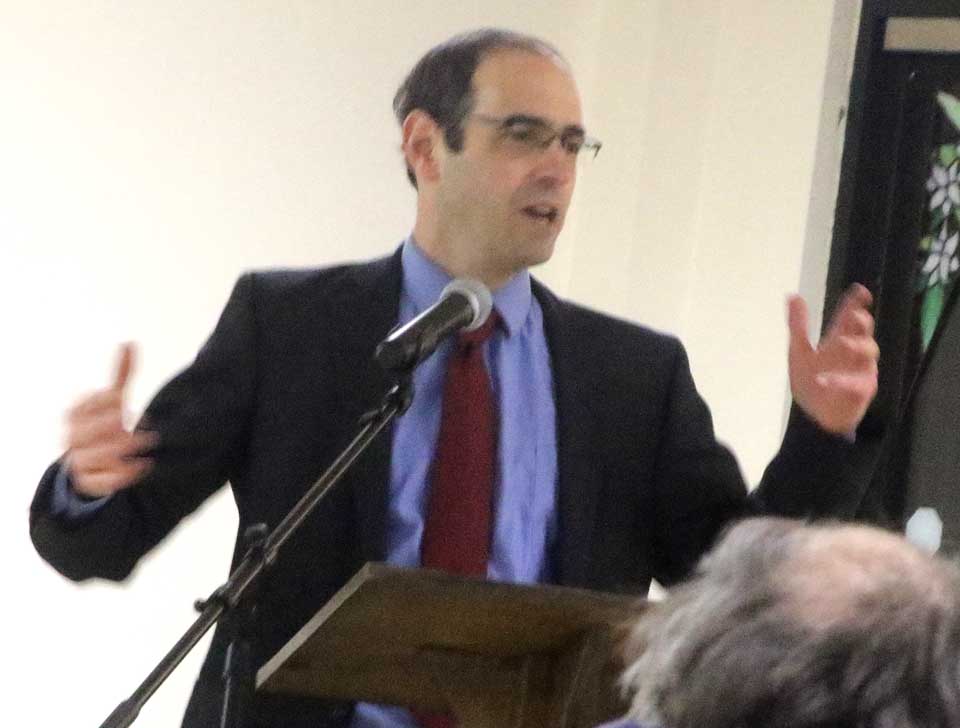
But 200 years later, Hartwick College Economics Professor Karl Seeley told 70-80 attendees at the Concerned Citizens of Oneonta forum this evening at Elm Park United Methodist Church, you discover the hidden costs of the bequest are bankrupting.
“It makes you rich enough to destroy your home,” Seeley said. “But not rich enough to build a new one.”
The dynamics of the evening, moderated by Hartwick Professor Kate O’Donnell, followed an outline another panelist, Dan Buttermann, brought back from Al Gore’s “Climate Reality Project” forum last year in Los Angeles: “Must we do it? Can we do it? Will we do it?”
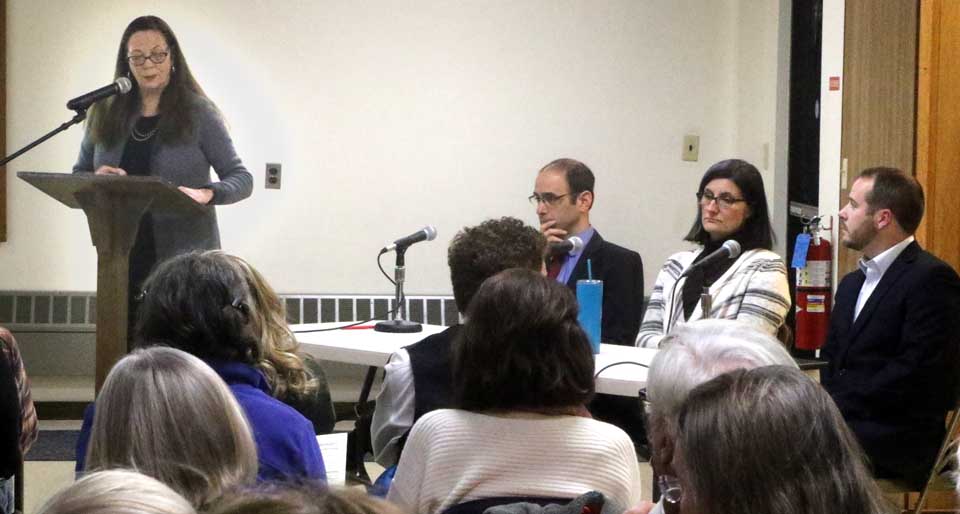
And OCCA’s Leslie Orzetti, the third panelist, addressed that final question, outlining steps being taken locally, from the half-dozen localities that have taking NYSERDA’s “Climate Smart Communities Pledge” – the City of Oneonta and Village of Cooperstown among them; not Otsego County yet – to SUNY Oneonta considering a small-scale windmill project at the north end of campus.
Other news also came out of the evening:
• Solstice Inc.’s 2-megawatt solar-energy farm on Pool Brook Road, Laurens, that will serve 355 homes, is going through final testing before becoming operational, Community Outreach Coordinator Jackie Burke reported.
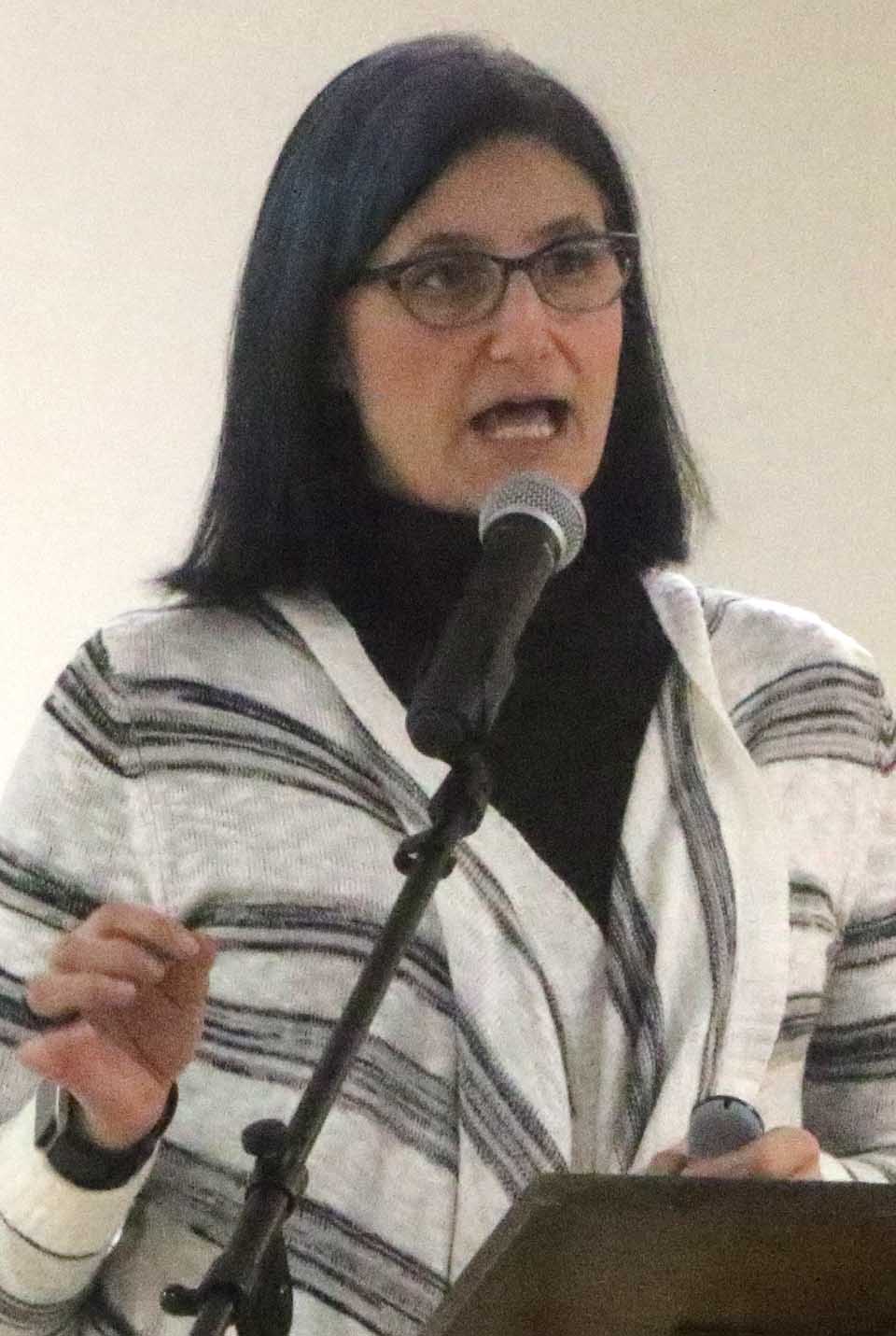
• Members of the county goverment’s Energy Task Force will be finalized at 9 a.m. next Tuesday, when the five-member Leadership Team meets, said Orzetti. She is on the Leadership Team, along county Reps. Meg Kennedy and Michele Farwell, Oneonta Town Supervisor Bob Wood and Oneonta City Engineer Greg Mattice.
• Corning’s Oneonta plant is planning a solar farm behind its building on the River Street Extension with the idea of generating enough energy to cover the plant’s needs, Council member Joe Ficano confirmed in response to a question from the audience.
The presentations underscore how greenhouse gases created by fossil fuels are causing global warming, but the speakers were generally bullish about the possibilities of renewables. For instance, Buttermann noted that there’s enough wind to generate 40 times the world’s energy needs, if it can be harnessed.
And Orzetti pointed out a global-warming upside: It may extend our growing season around here. CADE (the Oneonta-based Center for Agricultural Development & Entrepreneurship) is looking at ways to turn Upstate New York into the “nation’s breadbasket,” she said.
Still, the challenges of and contradictions in answering Gore’s three questions surfaced over the evening.
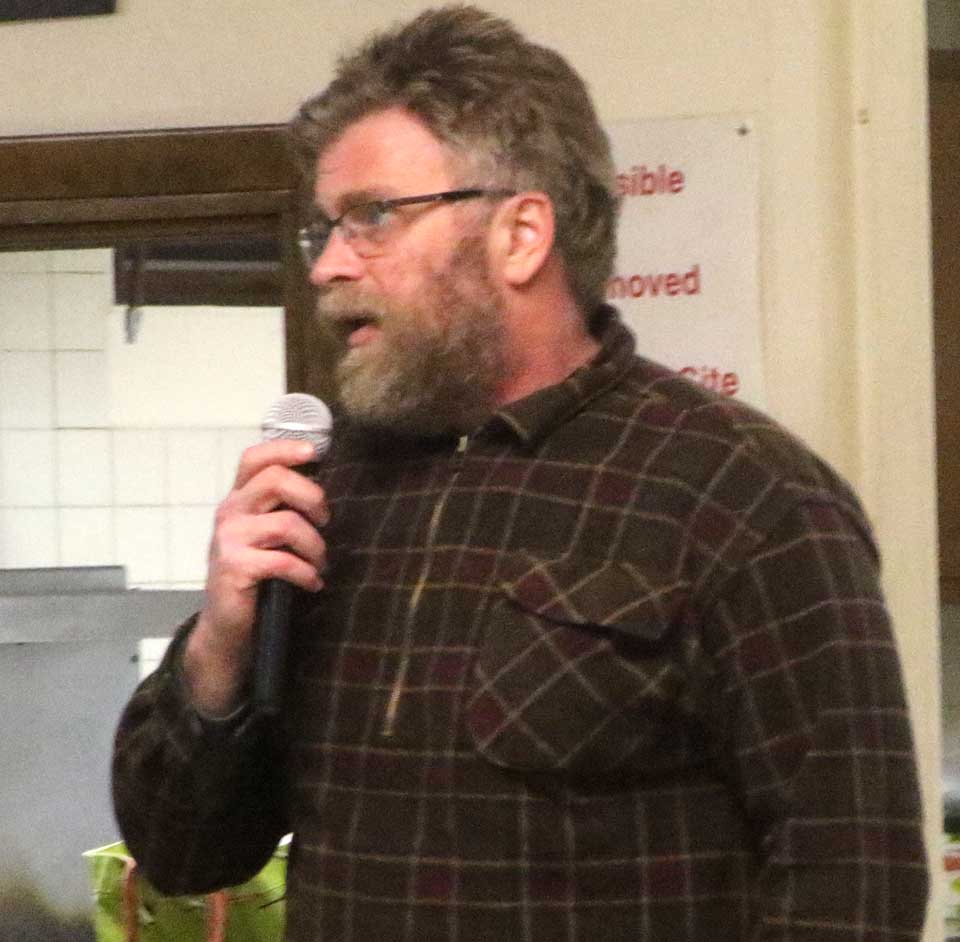
Ed Lentz, who chairs the Butternut Valley Alliance, asked whether a carbon tax could nudge people toward renewables. The problem with a carbon tax, Seeley said, is that the wealthy pay it unthinkingly, while poorer people who have to depend on gasoline and fuel oil are unfairly burdened.
But when Scott Fickbohm, the DEC environmental analyst, asked how to shift the local population to more expensive energy solutions, Seeley said: a carbon tax. “You make the problem resource more expensive,” he explained.
And while Orzetti generally favored wind, she – a marine biologist – said she feared a maritime wind farm Governor Cuomo is proposing off Long Island will disrupt fish migratory patterns.
In summing up, Seeley said the solution to energy challenges is two-fold: One is to use less energy through conservation; the other is to shift to renewables. “In the end,” he said, “cheap energy will kill us … We need ways of using energy efficiently, rather than very cheap energy.”


Correction: Orzetti did not say SUNY Oneonta was considering a small scale wind project. She mentioned a study done by Frederick Zindell of The New School looking at wind resources and possible siting locations in Oneonta.