

Military Legacy Lives on through Family’s Preservation Efforts
By PEYTON CARTER
OTSEGO COUNTY
Every summer, a couple from just outside Detroit, Michigan returns to Otsego County carrying soft brushes, conservation cleaner and decades of family research. Their mission is not simply to clean old headstones, but to preserve the lives and legacies of the Civil War soldiers buried beneath them.
For the wife, Jeanne K. (Dagg) Marble, whose family has traced its roots in the region for generations, the annual trips began with a lesson from her mother.
“My mother always said she did family history rather than genealogy,” she said. “She wanted to know who people were, not just their names and dates.”
That philosophy eventually led Jeanne to the graves of six Union soldiers who were all part of her family’s story.
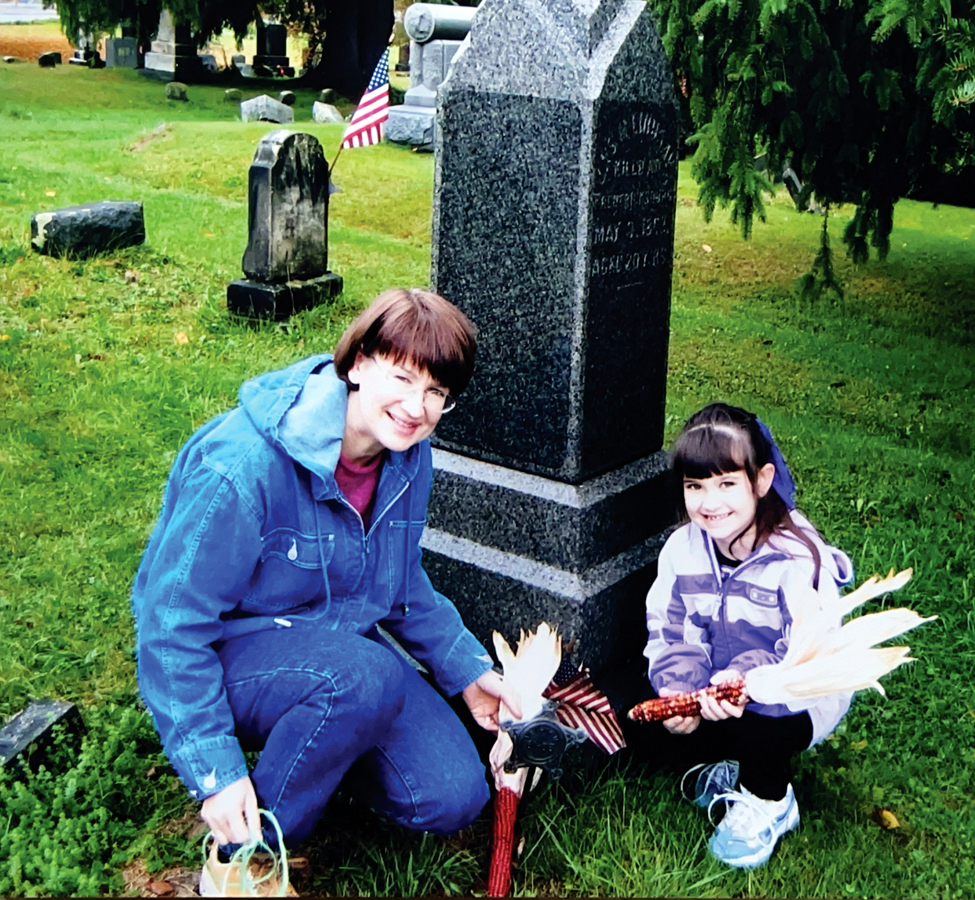
Jeanne’s first visit to Fly Creek Valley Cemetery in 1992 remains unforgettable. Standing at the grave of her beloved ancestor, James M. Lindsay, she placed Indian corn on his headstone to show he was still remembered.
James enlisted in the Union Army at 19 after working as a farmhand and turning his wages over to help support his mother. Serving with the 121st New York Infantry, he was written in the company record of Missing in Action at Salem Church, Virginia in 1863, shortly after his 20th birthday, before it was confirmed he was Killed in Action in Fredericksburg. His death left his mother dependent on a military pension.
James rests beside his brothers, William F. Lindsay and David Griffiths Lindsay, who also answered the call to serve. William survived a gunshot wound at Fredericksburg and bouts of typhoid fever before returning home on a disability pension, while David endured repeated hospitalizations for disease, later serving as a military nurse before returning to Fly Creek after the war. Together, the three brothers represent one family’s extraordinary sacrifice during the Civil War.
Another ancestor, Lewis H. Allen, served as a bugler with the 6th New York Cavalry. Captured during fighting in Virginia, he survived the horrors of Andersonville Prison in Georgia, where starvation and disease ravaged Union prisoners. Although eventually paroled, he died just one day after returning home, his health destroyed by his imprisonment.
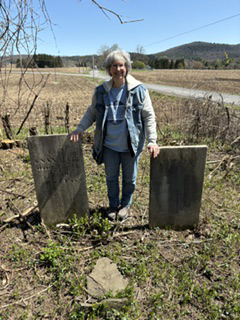
Lewis’ grandfather, Anan Hall, had also served during the Revolutionary War, giving the family a military legacy spanning generations. Anan Hall was born in Connecticut in 1757 and served in the Revolutionary War beginning in 1777. After the war, he and his wife, Comfort (Hodge) Hall, settled in Otsego County, where they raised their family and farmed the land. Today, descendants Jeanne Marble and Jann Dagg (Jann is Jeanne’s sister) honor their ancestors by preserving their graves, a passion for family history inspired by their 97-year-old mother, Peggy (Lindsay) Dagg, whose genealogical research began decades before online ancestry resources.
The family’s military story also includes half-brothers Gilbert B. Wires and Hall A. Morse. Hall had already served in the Mexican-American War before enlisting in the Union Army in 1862, but a severe knee injury ended his military service. Gilbert served two enlistments with the 76th New York Infantry, returning to civilian life after the war to farm and raise a family. Together, their service reflects another branch of a family whose members repeatedly answered the nation’s call.
Jeanne’s husband, Dale Marble, has a passion for headstone restoration as well. He, too, had an ancestor, Harmon M. Blood, who fought in the Civil War and was buried in the Mount Vision Cemetery. Harmon had enlisted in October 1862 at the age of 27 and served in the 152nd New York Infantry. He was an assistant surgeon for his regiment and graduated from the University of Buffalo. With both sides of the family having deep roots in the history of the county and war, this made the experience even more personal for the couple.
Knowing these stories makes preserving the graves deeply personal. Concerned that several family monuments had become stained, weathered or difficult to read, Jeanne and Dale sought professional training before attempting any restoration. They both completed a gravestone conservation course through the University of Michigan and practiced proper techniques in Ann Arbor before purchasing the recommended supplies and bringing those skills to New York.
Today, the Marbles’ restoration work follows accepted preservation practices. Using D/2 Biological Solution, soft brushes and water (never pressure washers or harsh chemicals) they carefully remove decades of biological growth while protecting the aging stone. Before beginning any work, they received approval from local cemetery officials.
While restoring family monuments, they met another volunteer, Loreen Allen, who was cleaning nearby Allen family headstones. Jeanne and Loreen discovered they may share distant family ties from the Civil War and spent hours working side by side to preserve the cemetery’s history.
Jeanne and Dale believe restoring headstones means restoring memory. This came up specifically when they had discovered Dale’s ancestor Harmon M. Blood, whose grave lacked recognition of his Civil War service. After reaching out to the Mount Vision Cemetery to confirm this mistake, they wanted to ensure that his sacrifice for his country would be properly acknowledged and respected. They believe every cleaned inscription makes another life visible to future visitors.
The couple often introduces themselves to the ancestors as they work among the graves.
“We talk about what they would think if they could see us here,” Jeanne said. “I think they’d be pleased they’re still remembered.”
Daughter Brianna Marble has embraced her parents’ passion for history, inspired by the letters, photographs and military artifacts passed down through generations. She has been making the trips every year with her mother since she was 10 months old and fully embraced the experience when she was 5 years old and declared to the cemetery, “These are my ‘grancestors,’ which the family still quotes to this day. The couple hopes Brianna will continue both the research and the restoration long into the future.
For the Marbles, each cleaned headstone is more than a restored monument. It is a promise that the stories of James, William, David, Lewis, Gilbert, Hall, Harmon, and Anan—and the sacrifices they made more than 160 years ago—will continue to be remembered.
“We’re the keepers of their information,” Jeanne said. “We want people to know they had a life.”

Very inspiring dedication to the memory of real family members who lived real lives here in our area. Thank you !